Teacher Planning Tips That Protect Your Peace 310
Planning a new school year is exciting.
It's also dangerous.
Not because planning itself is a problem, but because this is the season when teachers accidentally recreate the very exhaustion they spent the summer trying to recover from.
We start with the best intentions.
A new planner.
A new curriculum.
A new organizational system.
A fresh classroom.
A few ideas we saved from Instagram.
Before we know it, we've added so much that we're carrying the weight of an entire school year before the first student even walks through the door. That's why I think the best teacher planning tips have very little to do with planners. They have everything to do with protecting what matters.
Your Calendar Will Fill Up
Whether you plan for it or not, your calendar is going to fill up.
Meetings.
Assessments.
Parent communication.
Professional development.
Unexpected interruptions.
Those things are part of teaching. The question isn't whether your calendar will become full. The question is what gets there first.
Because if we don't intentionally protect the things that matter most to us, they'll quietly disappear beneath everything that feels urgent.
The Subject I Almost Stopped Teaching
When I taught first and second grade, there was one subject I loved more than almost any other.
Science.
Hands-on investigations.
Wonder.
Questions.
Watching children figure things out for themselves.
The problem was finding time for it.
Reading blocks became longer.
Math needed more minutes.
Interventions filled every empty space.
Science slowly became the subject we would teach...
"if we have time."
And honestly?
We almost never had time.
Sound familiar?
The Question That Changed Everything
Eventually, I stopped asking,
"When am I going to fit science into my schedule?"
Instead, I asked a different question.
"How can science become part of what we're already doing?"
That simple shift changed everything.
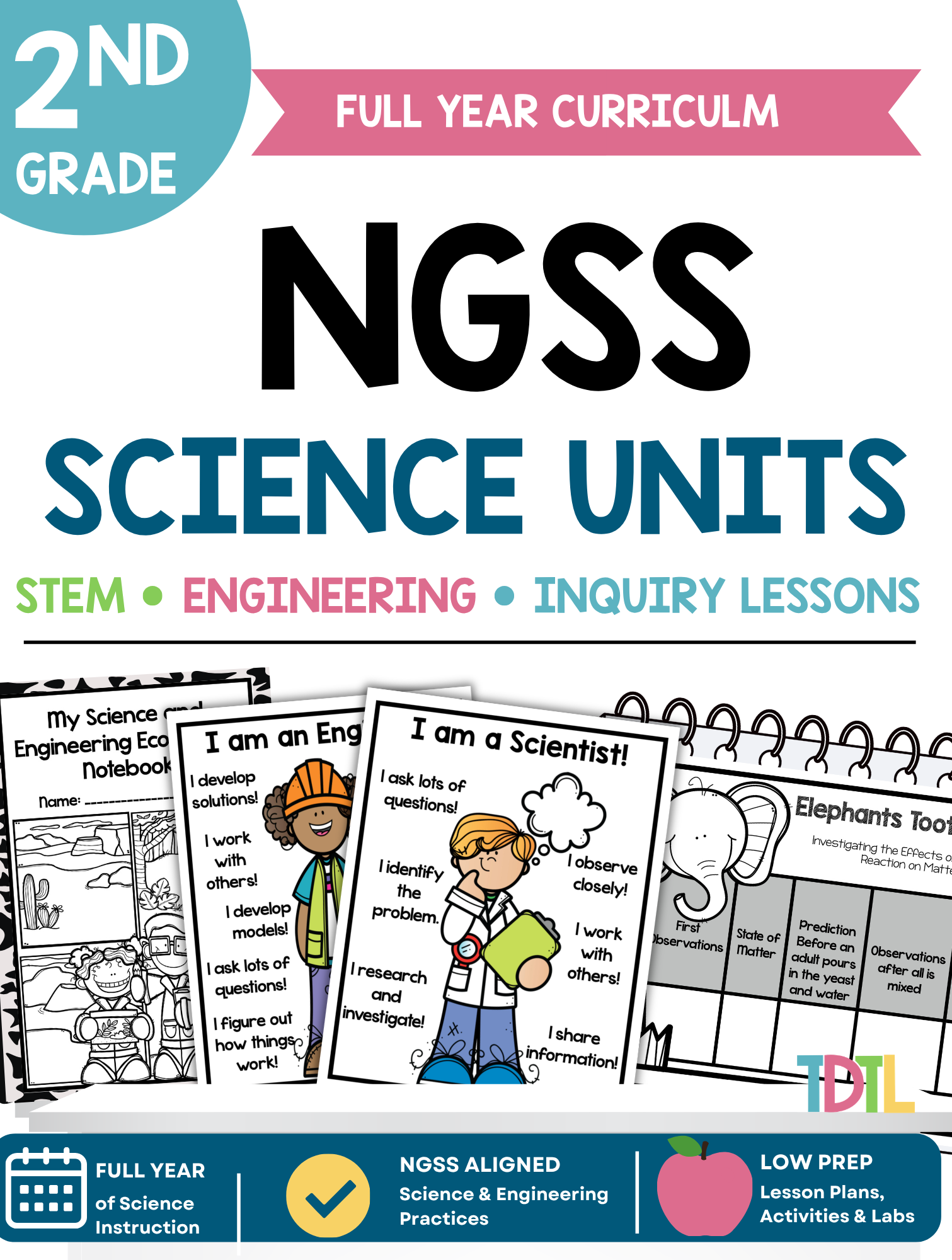
Instead of treating STEM like one more thing to squeeze into an already packed day, I began integrating science with reading.
Students explored informational text while investigating scientific ideas.
Vocabulary became meaningful because it connected to real experiences.
Reading wasn't interrupted by science.
Science strengthened reading.
And suddenly, I wasn't protecting a subject anymore.
I was protecting curiosity.
Protect the Parts of Teaching That Bring You Joy
Every teacher has something they never want to lose. Maybe it's your morning read-aloud. Maybe it's STEM. Maybe it's science experiments. Maybe it's independent reading. Maybe it's meaningful classroom conversations. Maybe it's simply eating lunch without answering emails.
Whatever it is, decide now that it deserves a place on your calendar.
Not after everything else. Before everything else. Because the things we care about most rarely survive by accident.
They survive because we protect them.
The Trust Yourself Framework
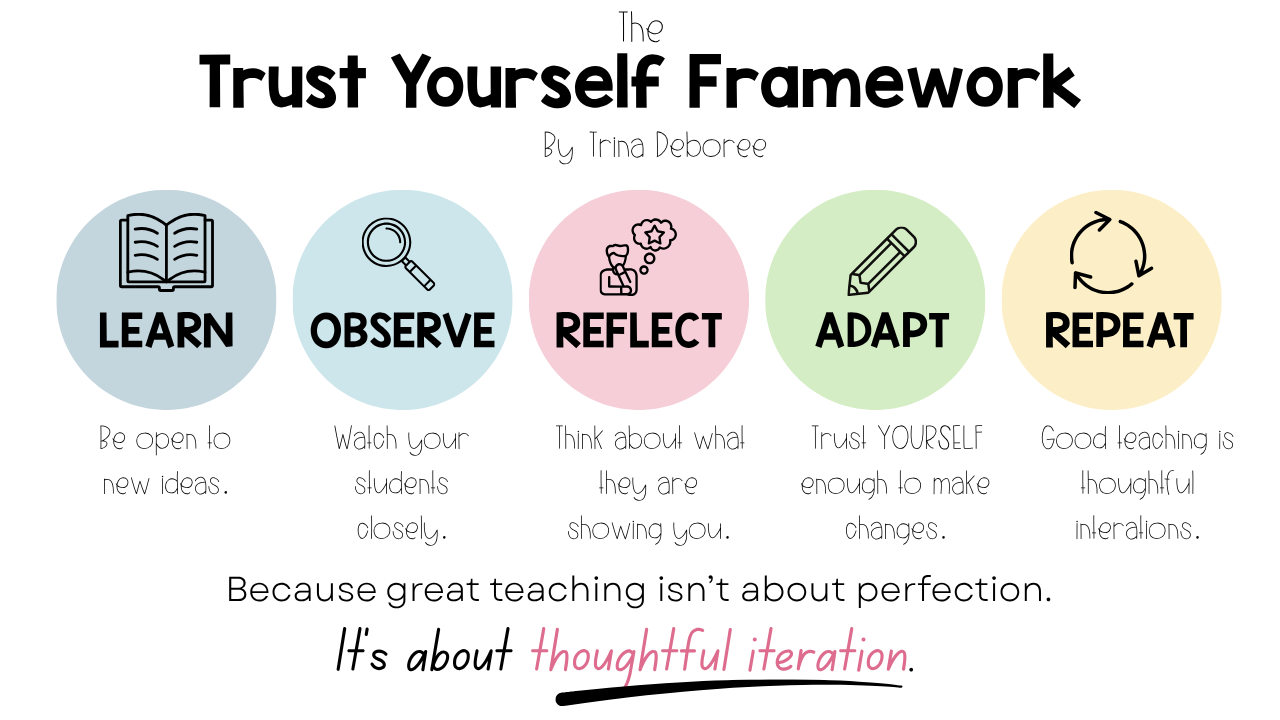
Over the past month on the One Tired Teacher podcast, we've been talking about trusting ourselves again.
One idea has continued to surface, so I finally gave it a name.
The Trust Yourself Framework.
Whenever I'm trying to make a teaching decision, I come back to these five steps.
Learn
Stay curious.
Read.
Explore new ideas.
Use AI if it helps.
Attend the professional development.
Learning keeps us growing.
Observe
Then watch your students.
Really watch them.
They'll tell you more than any pacing guide ever could.
Reflect
Ask yourself honest questions.
What's working?
What's not?
What are my students showing me?
Reflection is where teacher expertise grows.
Adapt
Here's the important part.
Give yourself permission to make changes.
Keep what helps.
Let go of what doesn't.
That's not ignoring research.
That's professional judgment.
Repeat
Teaching is never finished.
Every year teaches us something new.
Every class is different.
Thoughtful teachers don't chase perfection.
They keep learning.

Planning With Purpose
I think one of the biggest misconceptions about planning is that more planning always leads to better teaching. Sometimes it does. Sometimes it simply creates more pressure.
Instead of asking,
"What else should I add?"
Try asking,
"What do I want to protect?"
That answer will guide far more of your year than another color-coded planner ever will.
The Best Teacher Planning Tip I Can Offer
If I could leave you with one planning tip before the school year begins, it would be this.
Schedule your priorities before someone else schedules them for you.
Protect your read-alouds.
Protect your STEM lessons.
Protect your relationships with students.
Protect your evenings.
Protect your curiosity.
Protect your joy.
Because a meaningful school year isn't built by doing more.
It's built by protecting what matters.
Watch the Full Podcast Episode
In this episode ofOne Tired Teacher, I share the classroom experience that completely changed the way I planned my school year and introduce The Trust Yourself Framework—a simple process that has guided some of the best teaching decisions of my career.
If you're looking for teacher planning tips that reduce overwhelm instead of adding to it, I hope you'll join me for the conversation.
Resource Mentioned in the Show: