Teachers Not Following the Rules: Why Professional Judgment Matters More Than Perfect Compliance 309
One of the best teaching decisions I ever made started with a simple sentence.
"This doesn't feel right."
The advice came from someone I respected. It wasn't bad advice. In fact, thousands of teachers had been trained to do exactly what I was being asked to do.
So I smiled.
I nodded.
Then I walked back into my classroom and did something different.
Looking back, that moment taught me one of the most important lessons of my career.
Sometimes the most professional thing a teacher can do is trust her own judgment.
Teachers Are Natural Rule, Followers
Most teachers don't wake up looking for rules to break. If anything, we're the opposite. We read the manuals. We attend the training. We follow the pacing guide. We want to do the right thing because we care deeply about children.
That's one of the beautiful things about this profession.
But there's a difference between being teachable and believing every strategy works for every child.
And sometimes we forget that.
The Lesson That Didn't Fit My Students
Years ago, my principal sent several of us to Teachers College at Columbia University to learn about writing workshop. It was an incredible opportunity, and I came home excited to implement everything I'd learned. We started exactly as we'd been taught.
Small moments.
Tiny details.
Weeks of writing about one very specific experience.
I wanted it to work.
I expected it to work.
But something felt off.
Not because the approach was wrong. Because my students weren't connecting with it.
They dreaded writing.
Actually dreaded it.
That broke my heart.
Because one of the deepest reasons I became a teacher was to help children love learning.
Watching them lose that joy forced me to ask a difficult question.
Was I teaching the program, or was I teaching children?
Fidelity Isn't the Goal
I know "fidelity" is a word we hear all the time in education. Follow the curriculum with fidelity. Implement the program with fidelity. Teach the lesson exactly as written.
Structure has value.
Research matters.
But children are not identical.
The lesson that unlocks learning for one class might completely miss another. That's why professional judgment exists. Not so we can ignore good resources…
So we can use them wisely.
Great teachers don't throw out everything they've learned.
They observe.
They adjust.
They respond to the students sitting in front of them.
The Trust Yourself Framework
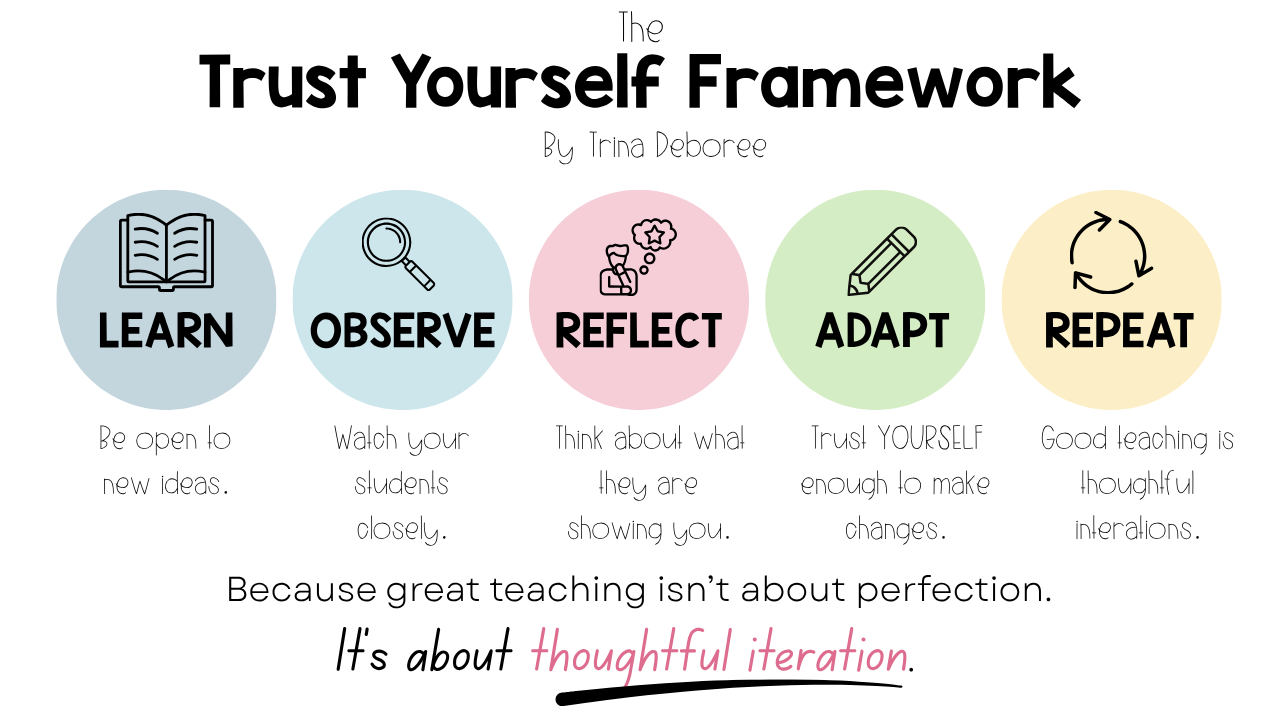
Over the years, I realized many of my best teaching decisions followed the same pattern.
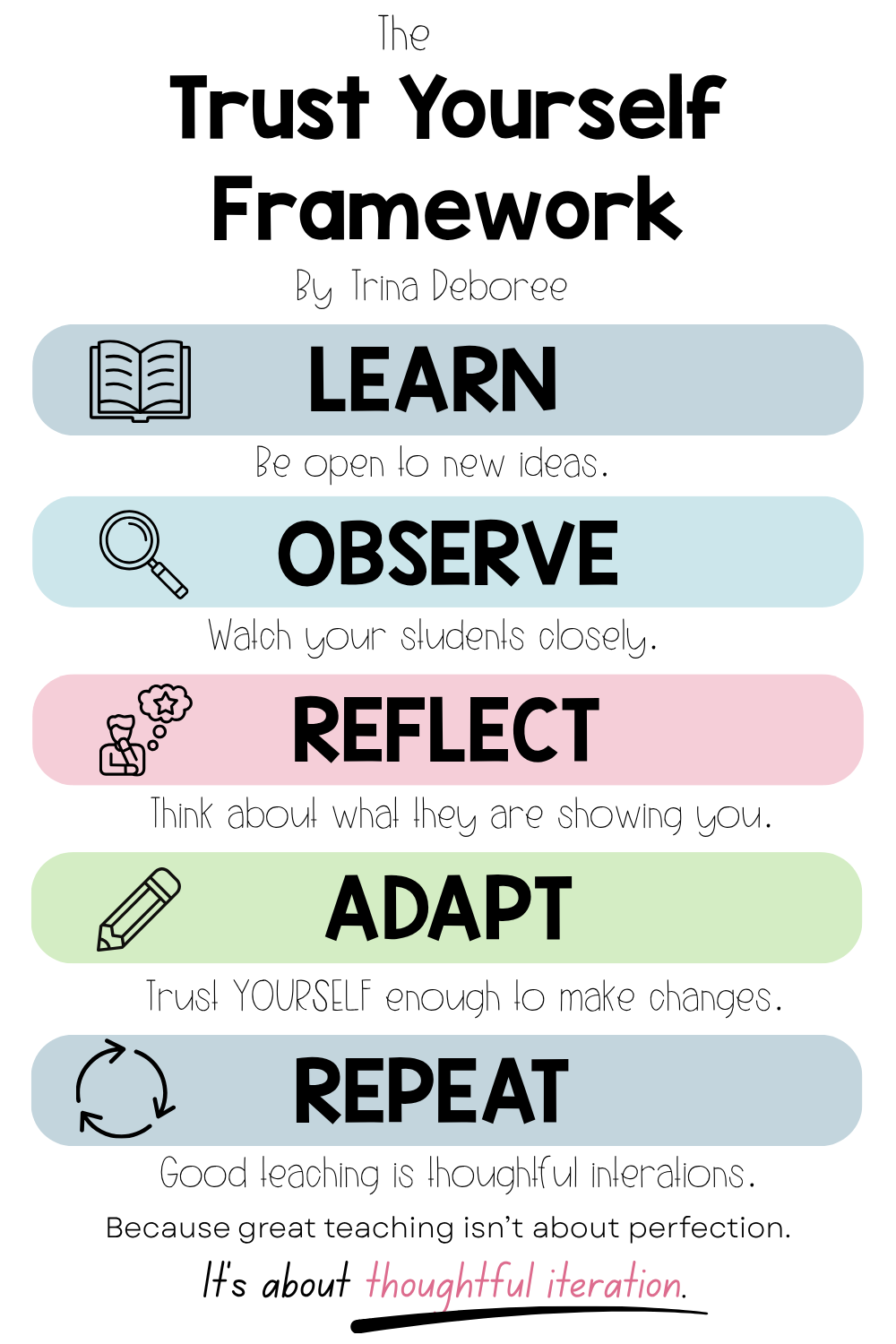
I now call it The Trust Yourself Framework, and it has become the foundation for how I think about great teaching.
Learn.
Stay curious. Read the research. Attend the training. Explore new ideas. Use AI if it helps.
Observe.
Watch your students—not just the pacing guide.
Children tell us far more than data ever can if we're paying attention.
Reflect.
Ask yourself honest questions.
Is this helping my students learn?
Is it building curiosity?
Is it working for these children?
Adapt.
Keep what works.
Change what doesn't.
Professional judgment isn't ignoring resources.
It's using them thoughtfully.
Repeat.
Teaching is never finished.
Every class teaches us something new.
That's not failure.
That's growth.
Curriculum Doesn't Teach Kids. Teachers Do.
This is something I believe more strongly now than I did thirty years ago.
Curriculum matters.
Professional development matters.
Research matters.
Artificial intelligence can even be a helpful thinking partner, with discernment.
But none of those things teach children.
Teachers do.
Children learn because someone notices when they're confused. Because someone changes the lesson when it's falling flat. Because someone sees curiosity where a program only sees pacing.
That's the work.
And no script can fully capture it.
You're Allowed to Pivot
One of the hardest things about teaching is believing we have permission to change course.
We worry we're doing it wrong. We wonder whether we're being faithful enough to the curriculum.
We question our instincts. But thoughtful teaching has never been about rigid compliance.
It's about thoughtful iteration.
Trying.
Watching.
Reflecting.
Adjusting.
Trying again.
That's not an inconsistency.
It's expertise.
Trust the Teacher You've Become
If there's one thing I hope you carry with you this school year, it's this:
You are allowed to pivot.
Not because you know everything.
None of us do.
But because you've spent years learning how children learn.
You've watched hundreds—maybe thousands—of moments unfold in your classroom.
That experience matters.
Your judgment matters.
And the students sitting in front of you deserve a teacher who is willing to think, notice, adapt, and trust herself enough to do what they need most. Because the goal was never perfect compliance, or at least it shouldn’t be.
The goal has always been to help children learn.
Watch the Full Podcast Episode on YouTube.
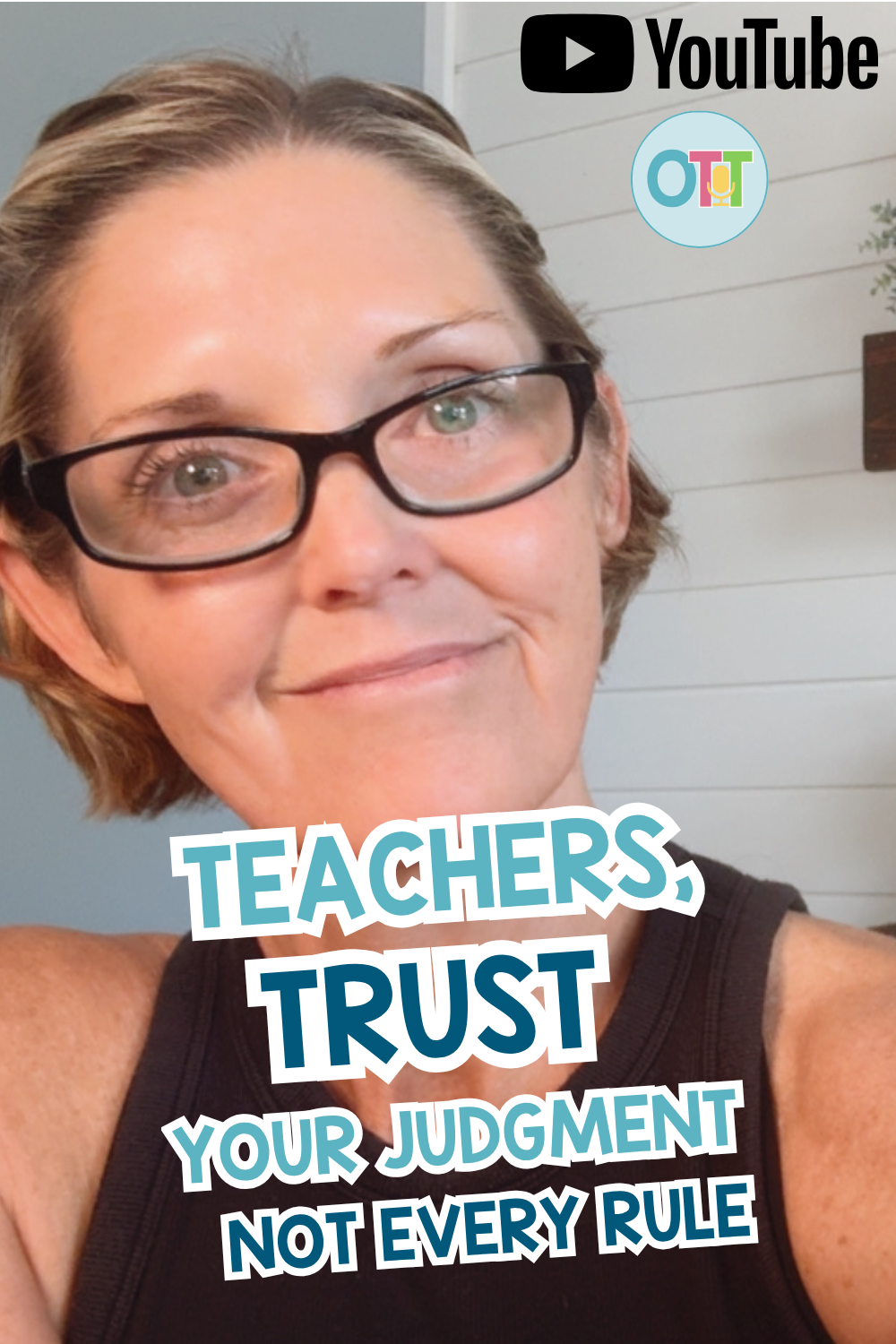
In this episode of One Tired Teacher, I share the classroom story that changed the way I think about curriculum, professional judgment, and why great teaching is built on thoughtful flexibility—not perfect rule following.
We'll also walk through The Trust Yourself Framework:
Learn. Observe. Reflect. Adapt. Repeat.
It's a simple process that has guided some of the best teaching decisions I've ever made, and I hope it encourages you to trust yourself a little more, too.