Community Building Activities for Elementary Students That Actually Build Connection
At the beginning of the school year, we spend a lot of time thinking about classroom community.
We plan morning meetings. We search for icebreakers. We create class rules, play team-building games, and look for community-building activities for elementary students that will help everyone get to know one another.
Those things can absolutely have value.
But after years of teaching, I've come to believe something a little different about classroom community.
An activity doesn't build community simply because we call it a community-building activity.
The connection is the part that matters.
Because before a child solves a math problem, opens a reading book, raises their hand, or worries about getting an answer wrong, they're trying to figure out something much more important:
Do I belong here?
And sometimes the simplest classroom conversations help them begin to answer that question with a yes.
The Little Moments That Build Classroom Community
One of my favorite parts of teaching wasn't actually the curriculum.
I know. Shocking.
It wasn't even my classroom library, although I certainly loved that.
It was listening.
I loved walking around the classroom while children talked with their partners. I'd hear one child explain something in a way another child had never considered. I'd hear questions, disagreements, and plenty of laughter.
Sometimes two children who barely knew one another on Monday would be finishing each other's thoughts by Friday.
Those moments might have looked small from the outside.
They weren't small at all.
Children were figuring out who made them laugh. Who thought like they did. Who didn't. Who would listen to them. Who they could safely disagree with.
They were becoming something more than a group of children assigned to the same classroom.
They were becoming a community.
Classroom Community Building Is Really About Connection
When we search for classroom community building activities, it's easy to focus on the activity itself.
What's fun?
What's cute?
What will fill those awkward first ten minutes of the morning?
But I think there's a better question:
Will this help my students know one another?
Because community happens when children begin sharing little pieces of themselves.
Their favorite animal.
The ridiculous thing that happened over the weekend.
Whether they'd rather fly or become invisible.
Whether pineapple belongs on pizza.
Those conversations can sound silly to adults.
But listen closely to what's actually happening.
"You like that too?"
"I never thought about it that way."
"No way! I completely disagree."
"Tell me why."
Every time children discover something about one another, another little thread of connection forms.
And eventually, a room filled with individual children starts becoming our class.
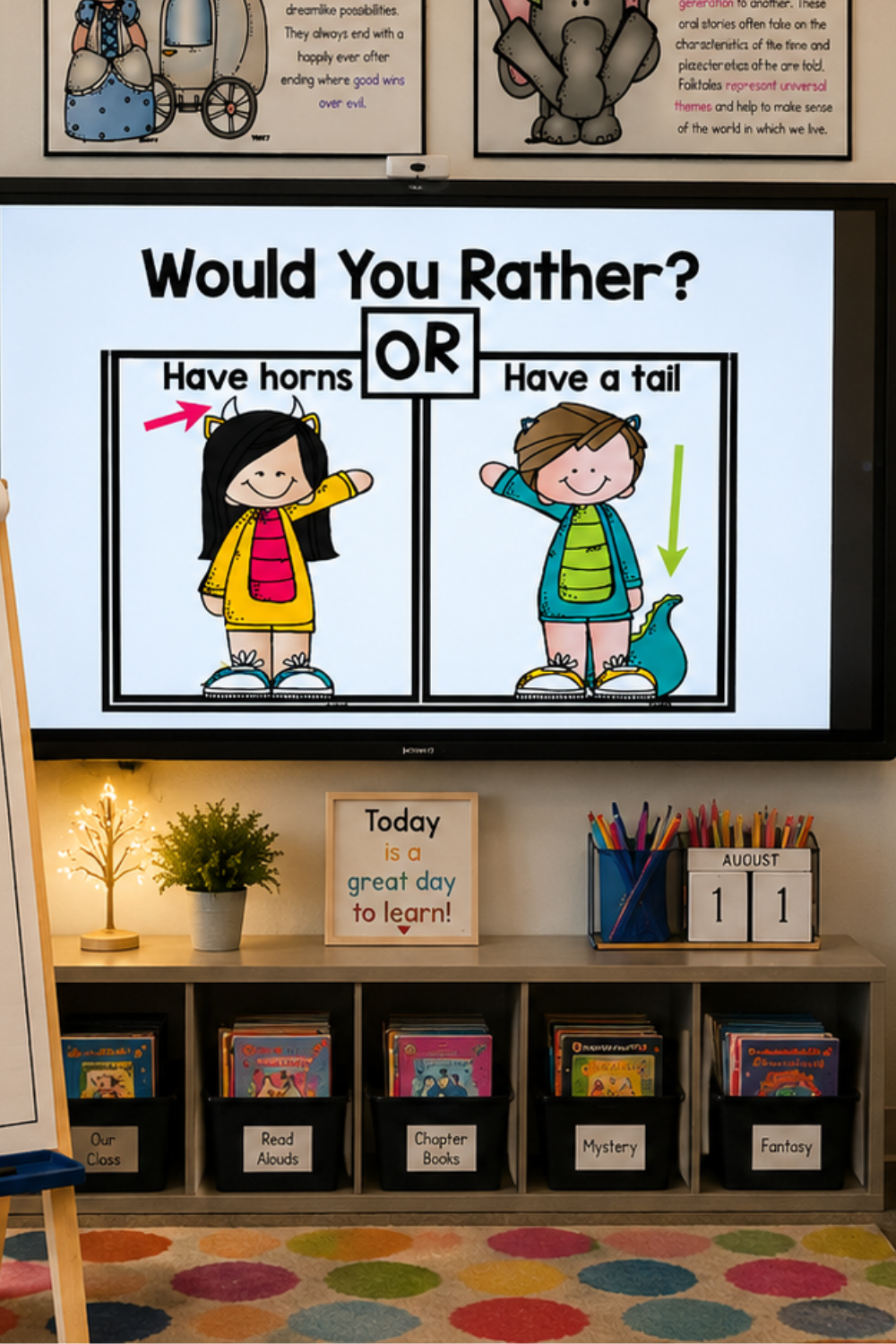
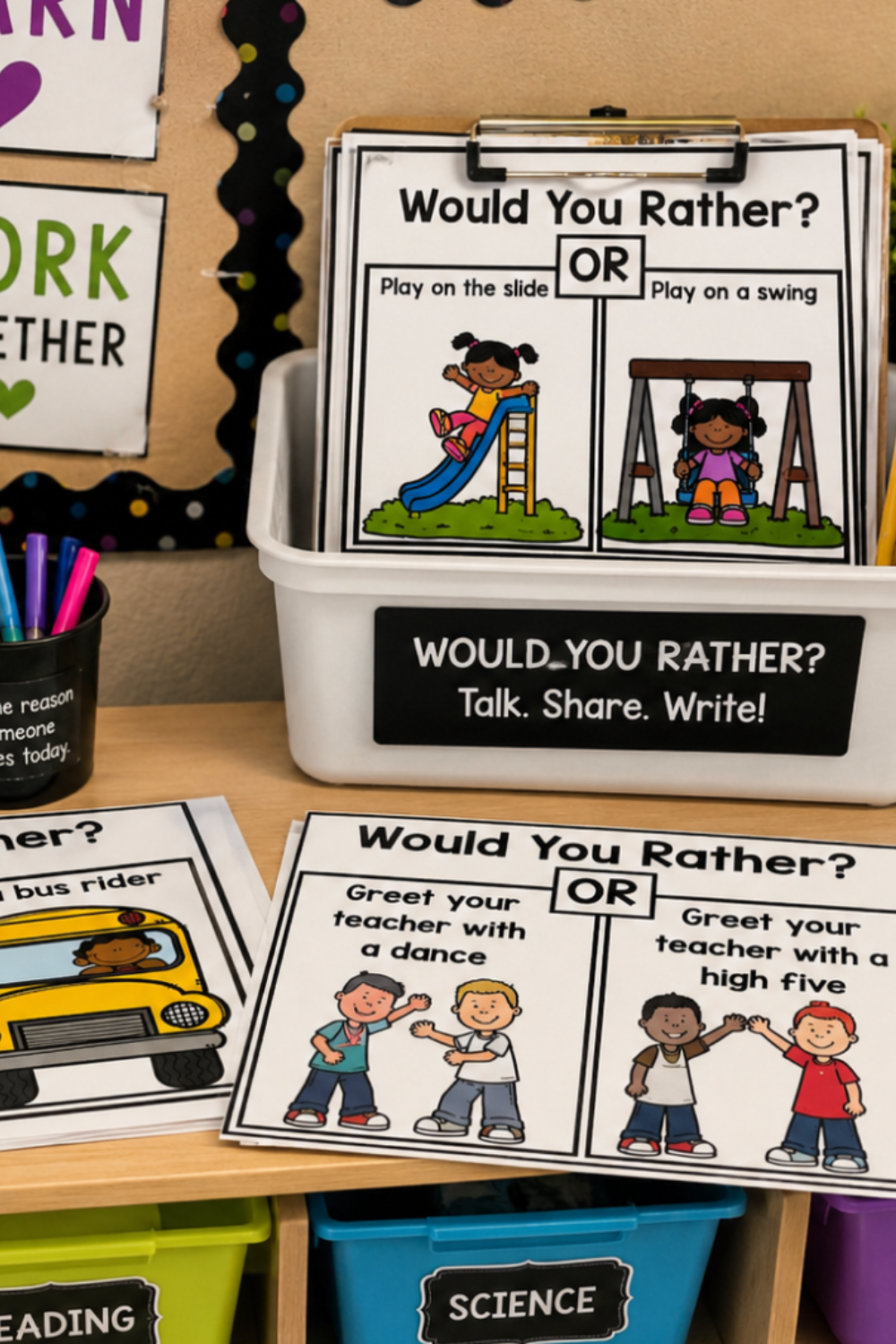
This is one reason I've always loved using Would You Rather questions with kids.
They're incredibly simple.
But simple doesn't mean meaningless.
Imagine a quiet child sitting in your classroom during the first few weeks of school. Maybe they're not ready to stand in front of everyone and share three interesting facts about themselves.
Honestly, that can be a lot of pressure for some kids.
But ask:
Would you rather have horns or a tail?
Now we've changed the situation.
We're not demanding vulnerability.
We're giving connection somewhere safe to begin.
A child can choose an answer. Another child can laugh. Someone asks why. Another student discovers they chose the same thing.
And just like that, they're talking.
What Makes a Community Building Activity Actually Work?
When you're choosing community-building activities for elementary students, don't just ask whether children will enjoy them.
Ask whether the activity creates an opportunity for connection.
I've found that the activities that do this best tend to have four things in common.
1. They're low pressure.
Children shouldn't have to reveal something deeply personal just to participate.
Connection can grow slowly. Let it.
2. They're inclusive.
Every child needs an entry point.
The loud, outgoing child shouldn't be the only one who thrives during classroom community building. Your quieter students deserve ways to participate that feel safe, too.
3. They're discoverable.
Children should walk away knowing something about another person that they didn't know before.
That's where those little "You too?" moments happen.
4. They're respectful.
Different answers, backgrounds, experiences, and opinions need to be welcomed.
Children can disagree and still like one another.
In fact, learning how to do that may be one of the most important things we teach them.
Connection Isn't Separate From Learning
Here's the part I don't want us to miss.
Classroom community isn't something we build so we can finally get to the "real" learning.
Connection helps make the learning possible.
When children begin to trust the people around them, they're more willing to take risks.
They're more willing to wonder.
They're more willing to make mistakes.
They're more willing to say, "I don't know."
And they're more willing to try again.
That sense of belonging we're building during those seemingly tiny conversations isn't taking time away from learning.
It's helping create the conditions where learning can happen.
You Don't Need Another Elaborate Activity
Teachers already have enough to do.
You don't need an elaborate classroom community system or one more Pinterest-perfect back-to-school activity added to your plate.
Sometimes you just need to make room for little opportunities to connect.
A question.
A laugh.
A shared story.
That wonderful moment when one child looks at another and realizes:
You get me.
Those moments add up.
Eventually, a classroom filled with individual children starts to feel like somewhere they belong.
And when children feel like they belong, learning becomes a little safer, too.
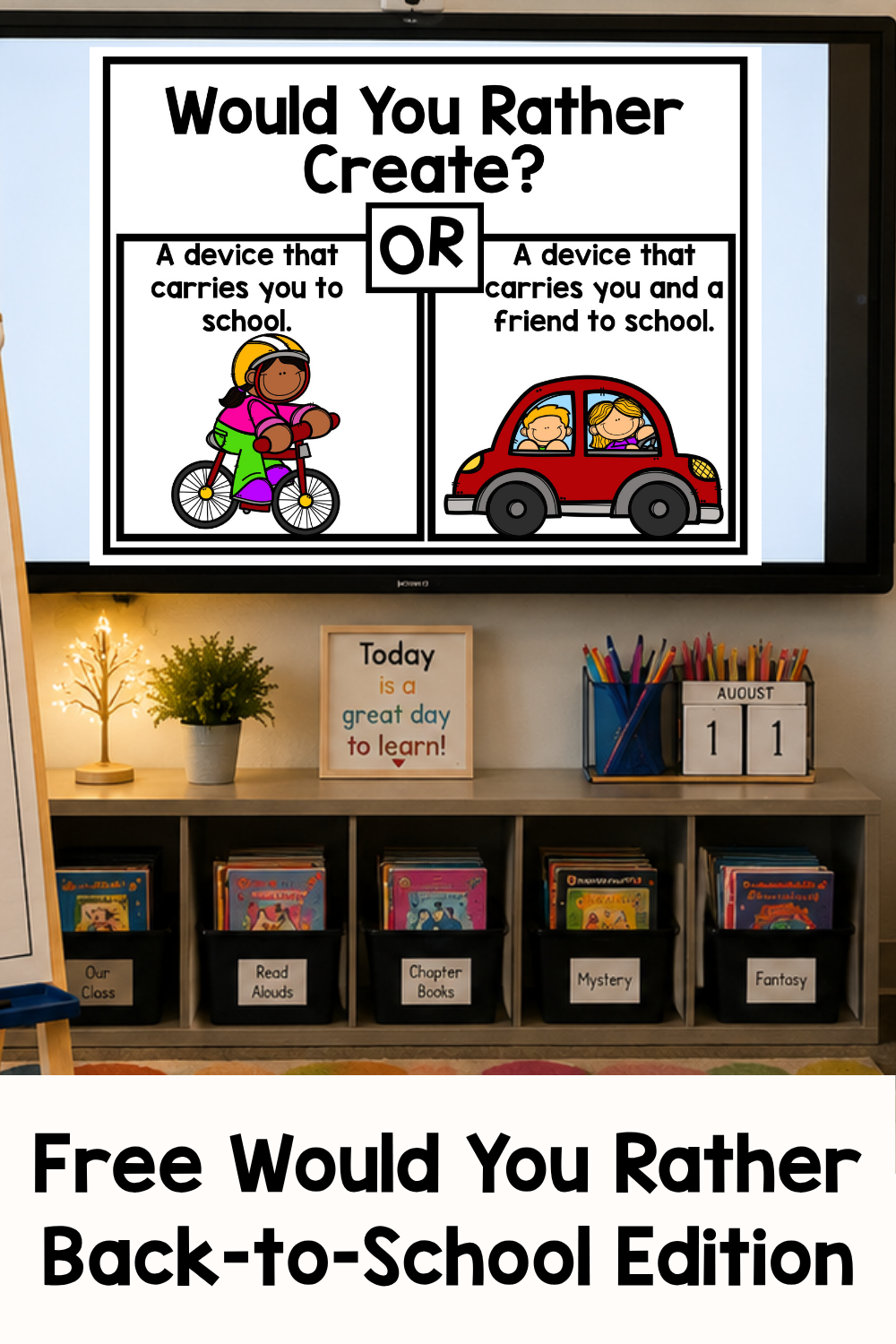
Try Would You Rather for Classroom Community Building
One of the easiest ways I've found to create these low-pressure opportunities for connection is through Would You Rather questions.
That's why I created my Would You Rather resources in the first place. I wanted something easy for teachers to use but meaningful for children—something that encouraged them to listen, laugh, explain their thinking, and get to know the people sitting beside them.
Later, those same conversations can naturally grow into some pretty powerful opinion writing.
But especially at the beginning?
It's about conversation.
It's about connection.
It's about helping children realize:
There's a place for me here.
If my Would You Rather Bundle would make that a little easier in your classroom, I'll link it below.
Use it if it fits.
Leave it if it doesn't.
Because you don't need the fanciest community-building activities for elementary students.
You need opportunities for children to know one another.
And sometimes community starts with something as simple as:
"Would you rather...?"