

STEM Story Read Alouds: Turn Picture Books Into Hands-On Learning
One of the biggest mistakes I've made in the classroom is believing that the story ends when we close the book.
I don't think that's true.
In fact, I think that's exactly where the best part can begin.
Because children don't just remember the stories they hear.
They remember the stories they get to live.
That's why I love STEM story read-alouds so much. A great picture book can do more than teach a reading skill or lead to a few comprehension questions. It can become an invitation for children to build, imagine, solve, create, and wonder.
And sometimes all it takes is one simple question:
What could my students create because of this story?
STEM Story Read Alouds Give Children Somewhere to Take the Story
Think about what children naturally do with stories they love.
They retell them.
They act them out.
They wonder what would happen next.
They imagine themselves as the characters.
They come up with different endings.
They ask, "What if...?"
We don't have to manufacture that curiosity. It's already there.
A STEM story read aloud simply gives children somewhere to take it.
Instead of closing the book and immediately moving to the next lesson, we can pause and ask:
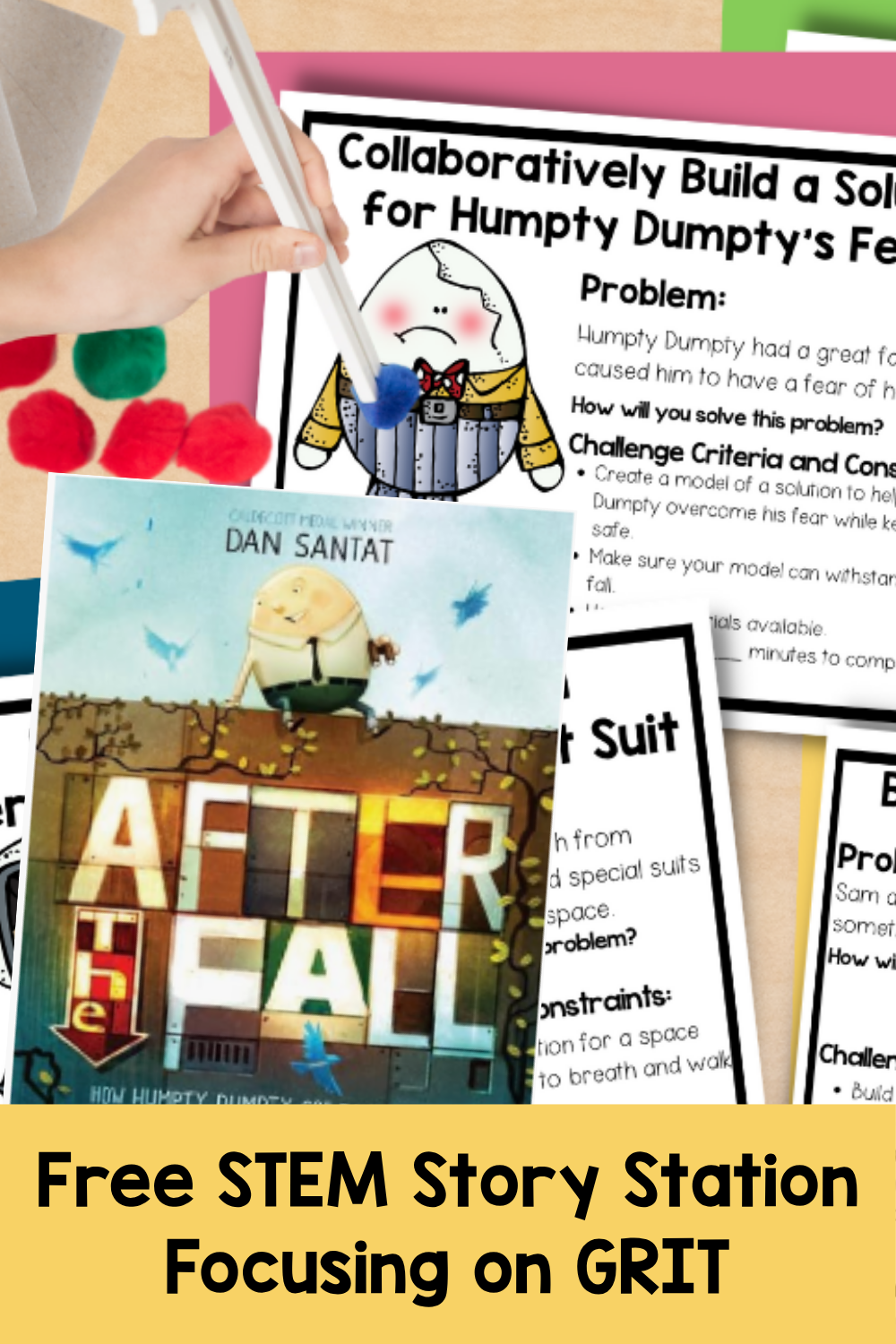
How could we solve the problem in this story?
Suddenly, the story isn't finished.
It's just getting started.
The STEM Story Boxes That Reminded Me Why This Matters
My Go-To Storybook STEM Supplies (Affiliate Links Included)
A few weeks ago, my parents wanted to make a significant donation to an organization that helps families who are trying to get back on their feet.
Their original idea was to purchase resources from my shop.
There was only one problem.
I couldn't exactly send digital resources to children who needed something they could actually hold.
So I changed the plan.
I bought books.
Popsicle sticks.
Cardboard.
Tape.
Play-Doh.
Pipe cleaners.
Simple, everyday STEM materials.
And I started building.
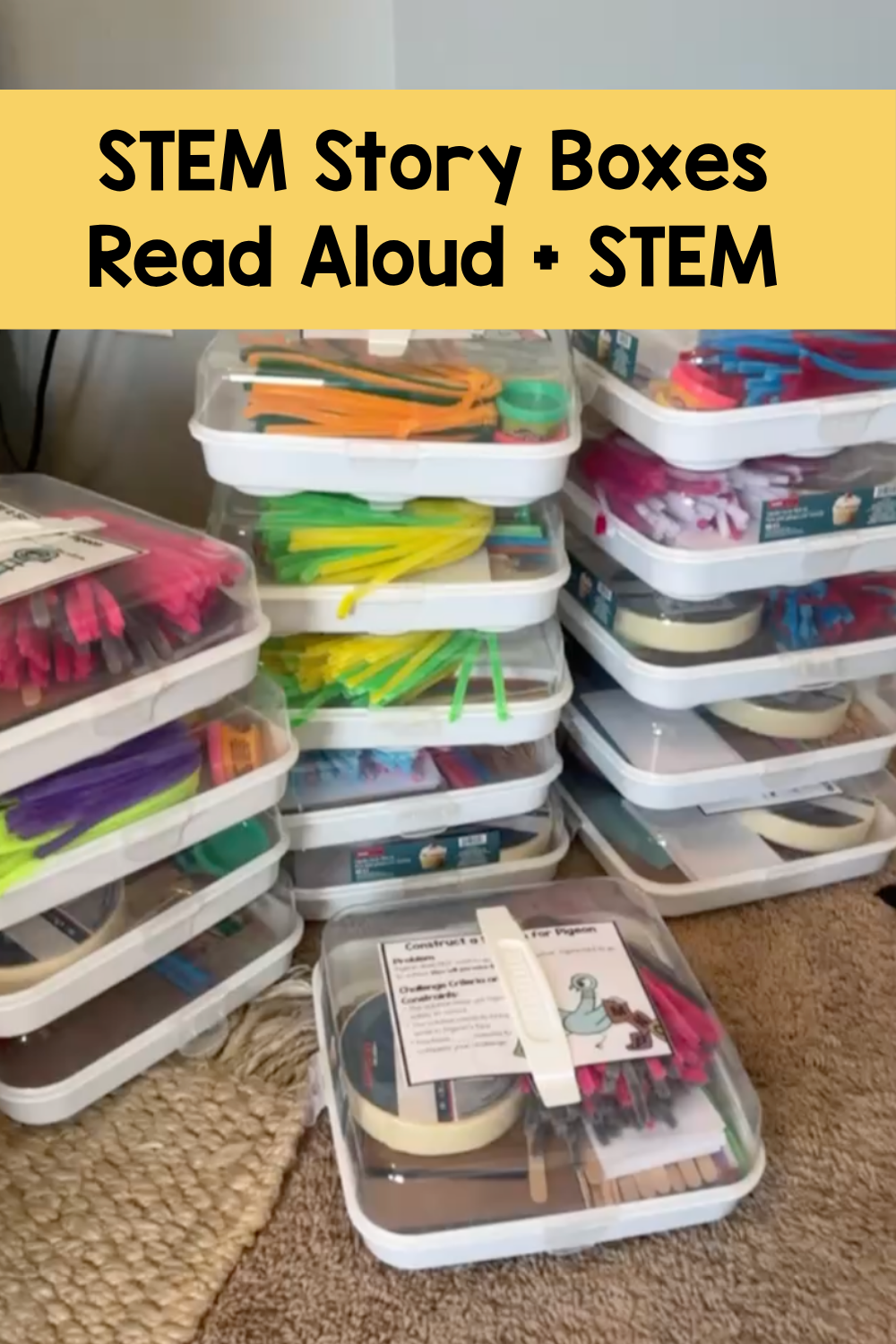
Eventually, I had created 20 STEM story boxes—ten using Elephant & Piggie books and ten using Pigeon books.
Every box had a story.
Every box had materials.
And every box invited a child to build something after reading.
But I couldn't stop adding things. I'd finish a box and think, Oh, this would make it even better. So I'd add something else. I kept picturing the children who would eventually open them—children whose families were walking through a difficult season.
Somewhere in the middle of packing all those boxes, I realized:
I wasn't really sending STEM materials.
I was sending possibility.
I was sending curiosity.
I was sending an experience.
And most of all, I hoped I was sending a message to a child I'd probably never meet:
Someone believes you're worth building something beautiful.
A STEM Challenge Is Different From a Craft
There's an important distinction here.
When I talk about extending a STEM book read aloud with a challenge, I don't mean giving children a model and having everyone recreate it.
If 24 children make 24 identical projects, we've probably created a craft.
There's nothing wrong with crafts. I love them.
But that's not the same thing as a STEM challenge.
Instead, ask children:
How would YOU solve the problem?
Then give them room to wrestle with it.
Let them come up with an idea you never considered.
Let one child build a bridge while another creates a pulley and somebody else invents something you don't even have a name for.
Let them fail.
Let them change their minds.
Let them borrow an idea from a classmate and make it better.
Let them surprise you.
We don't want 24 identical solutions.
We want 24 thinkers.
That's the magic.
Picture Books Can Become Imagination in Motion
This is one of the reasons I fell in love with Storybook STEM in the first place.
Not because every picture book needs an engineering challenge attached to it.
It doesn't.
But stories naturally invite children to think.
What would I do?
Could I solve that problem?
What would I change?
Could I build something that would help?
A story suddenly becomes more than literacy.
It becomes imagination in motion.
And that kind of thinking gives us something a worksheet often can't.
Children aren't trying to figure out what answer the teacher wants. They're trying to figure out what they think. That's a very different kind of learning.
You Don't Need a Fancy Makerspace
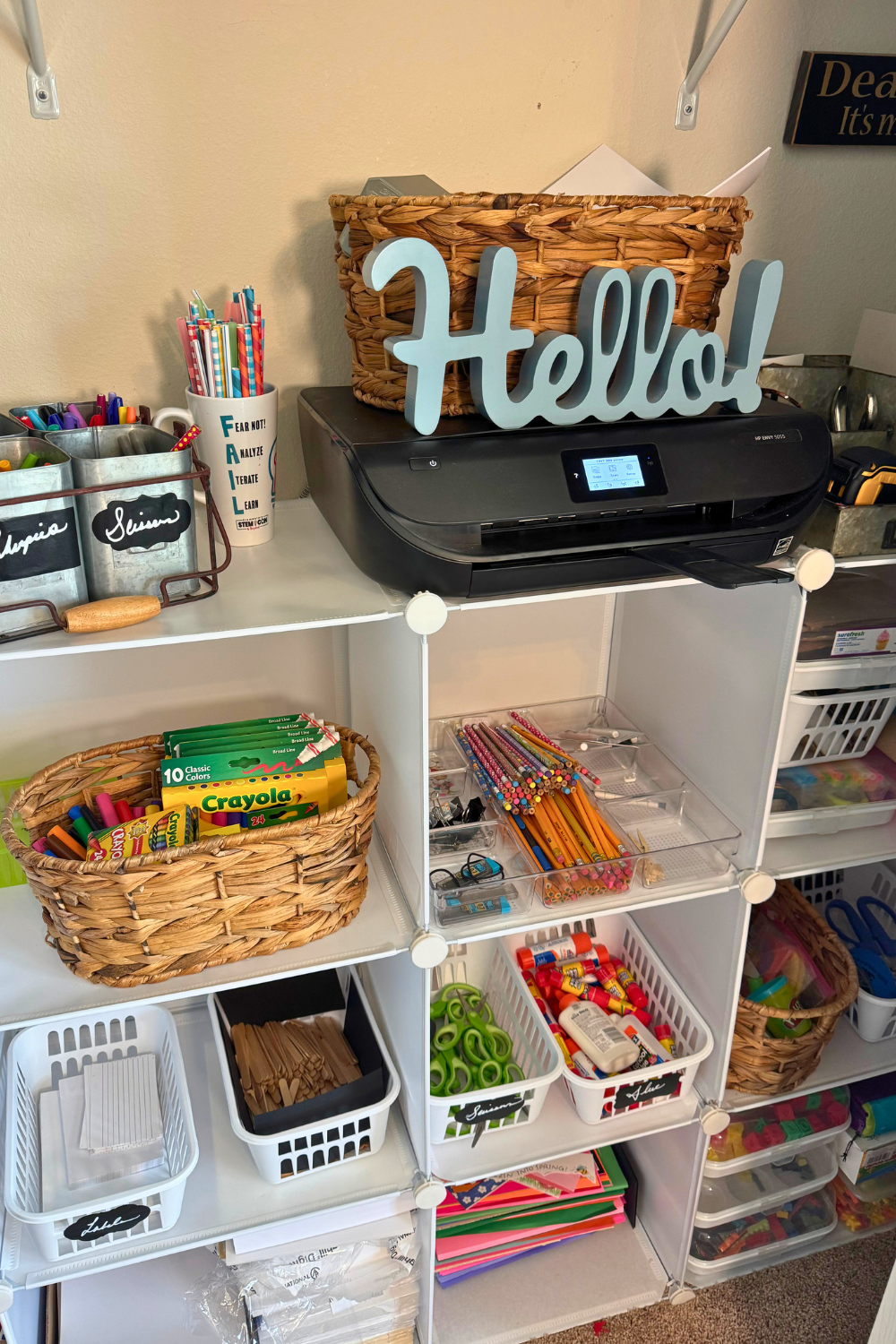
This is also where I think we can make STEM unnecessarily complicated. You don't need an elaborate makerspace. You don't need expensive building kits. You don't need cabinets filled with specialty materials.
Cardboard.
Tape.
Popsicle sticks.
Pipe cleaners.
Play-Doh.
Paper.
Recyclables.
Add some imagination and one really good story.
That's enough.
The power isn't in the materials. It's in what we're asking children to do with them.
Stories Give Children a Safe Place to Practice Life
There's another reason I think this matters that goes beyond STEM.
Stories are one of the few places where children can safely practice being someone else.
They can imagine another person's perspective. They can experience a problem without actually living through it. They can practice empathy. They can try on behaviors they admire. They can make decisions and see what might happen next.
And when we allow them to build, create, discuss, and problem-solve around those stories, we're giving them another way to process those ideas.
That's why I said something in this episode that I keep coming back to:
Stories don't just entertain. They rehearse life.
That's bigger than reading comprehension.
And it's bigger than STEM.
It's part of how children make sense of themselves, other people, and the world around them
Try This After Your Next Read Aloud
You don't have to completely change your reading block. You don't need to turn every book into a week-long project. And you definitely don't need to create something elaborate.
The next time you finish a picture book, just pause.
Before you close it, ask:
What could my students create because of this story?
Or better yet, ask your students:
How could YOU solve the problem?
Then listen.
Their answers may be completely different from anything you expected.
Good.
That's the point.
Want to Try Storybook STEM in Your Classroom?
This is exactly why I created my Storybook STEM Challenges.
I wanted children to have opportunities to keep thinking after the story ended—to build, solve, collaborate, imagine, and create their own solutions.
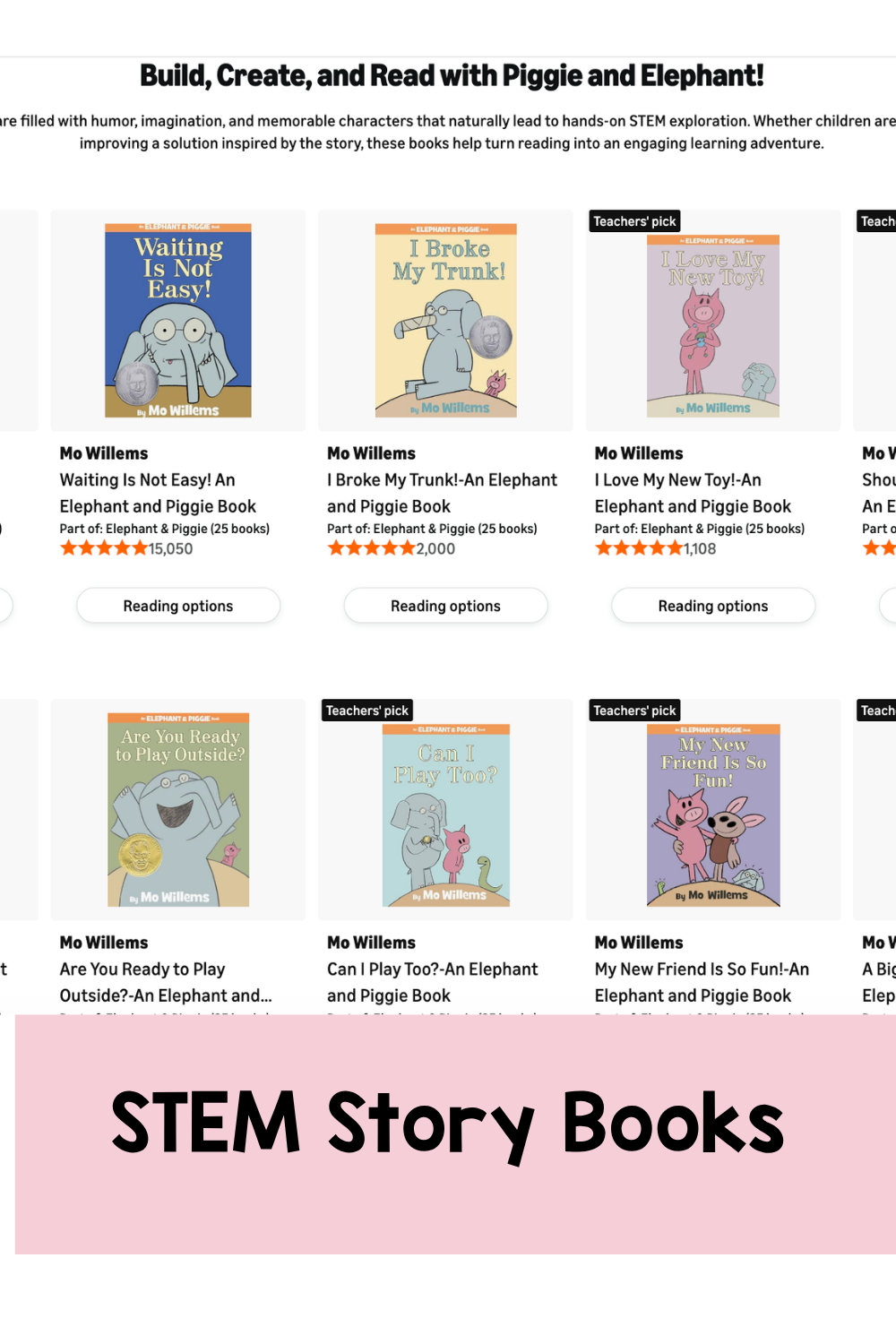
If you'd like to try it with your students, I'll link my Mo Willems Storybook STEM Bundle here, along with some of my favorite simple STEM materials, the books I use, and even the little LEGO-inspired storage boxes I used when creating the donation kits.
MO WILLEMS STORYBOOK STEM BUNDLE
PIGGIE AND ELEPHANT BOOKS USED
Use what fits.
Leave the rest.
Stories Shouldn't End at "The End"
Throughout September, we've been talking about protecting human connection.
We've talked about conversation.
Curiosity.
Kindness.
And now, stories.
Because stories have connected human beings long before there were classrooms, screens, standards, or worksheets.
And when children read together and then build together, something beautiful happens.
The story becomes theirs.
So don't worry about creating the perfect STEM lesson.
Find a really good story.
Give children a few simple materials.
Ask a question.
And get out of their way.
Because sometimes the most meaningful learning begins after the last page.