

4 Simple Halloween Science Experiments for the Classroom

If you need some Halloween science experiments for your classroom, I have four you can actually do with elementary students without turning your classroom into a laboratory.
And you don't have to spend your Sunday driving around town looking for weird science supplies.
We're talking about things like:
Balloons.
Marbles.
Jars.
Spaghetti.
Water.
And a really good question.
Actually, I'd argue that the question is the most important part.
Because our goal isn't simply to make something spooky happen.
We want children wondering:
What do I notice?
What do I think is happening?
Why?
That's where the science begins.
Why Halloween Science Works So Well
I love using seasonal activities to teach science because kids are already interested.
It's October.
They want pumpkins and monsters and vampires and Frankenstein.
Okay.
Let's use that.
A marble can just be a marble.
Or today, it can be an eyeball.
Cooked spaghetti?
Brains, obviously. 😂
We're not changing the science.
We're changing the invitation.
And for younger children, sometimes that invitation is all it takes to get them leaning closer, touching, observing, talking, predicting, and asking questions.
Here are four simple ways to do it.
Halloween Science Experiment #1: Trick-or-Treaters Explore Matter
This is one of my favorite Halloween science experiments for teaching states of matter because it starts with a mystery.
You'll need three inexpensive trick-or-treat bags and three balloons.
Place one balloon inside each bag:
Bag A: A balloon containing a marble
Bag B: A balloon containing a small amount of water
Bag C: A balloon containing air
Don't overinflate the air balloon. You just need enough air inside for students to feel it.
Then let students investigate without showing them what's inside.
What do they notice?
How does each balloon feel?
Can they figure out what's inside?
What properties can they observe?
Eventually, students discover that they've been investigating three different states of matter.
The marble is a solid.
The water is a liquid.
The air is a gas.
And that's what I love about this experiment.
Instead of beginning with:
"Today we're going to learn about solids, liquids, and gases..."
we begin with:
"What's inside the trick-or-treat bags?"
Now we've got a mystery.
And mysteries make people curious.
Teacher tip: If you're going to cut open the water balloon at the end, do it carefully over a bowl.
Otherwise, your states-of-matter investigation may quickly become a lesson on cleaning the classroom floor. 😂
Halloween Science Experiment #2: Eyeballs in a Jar
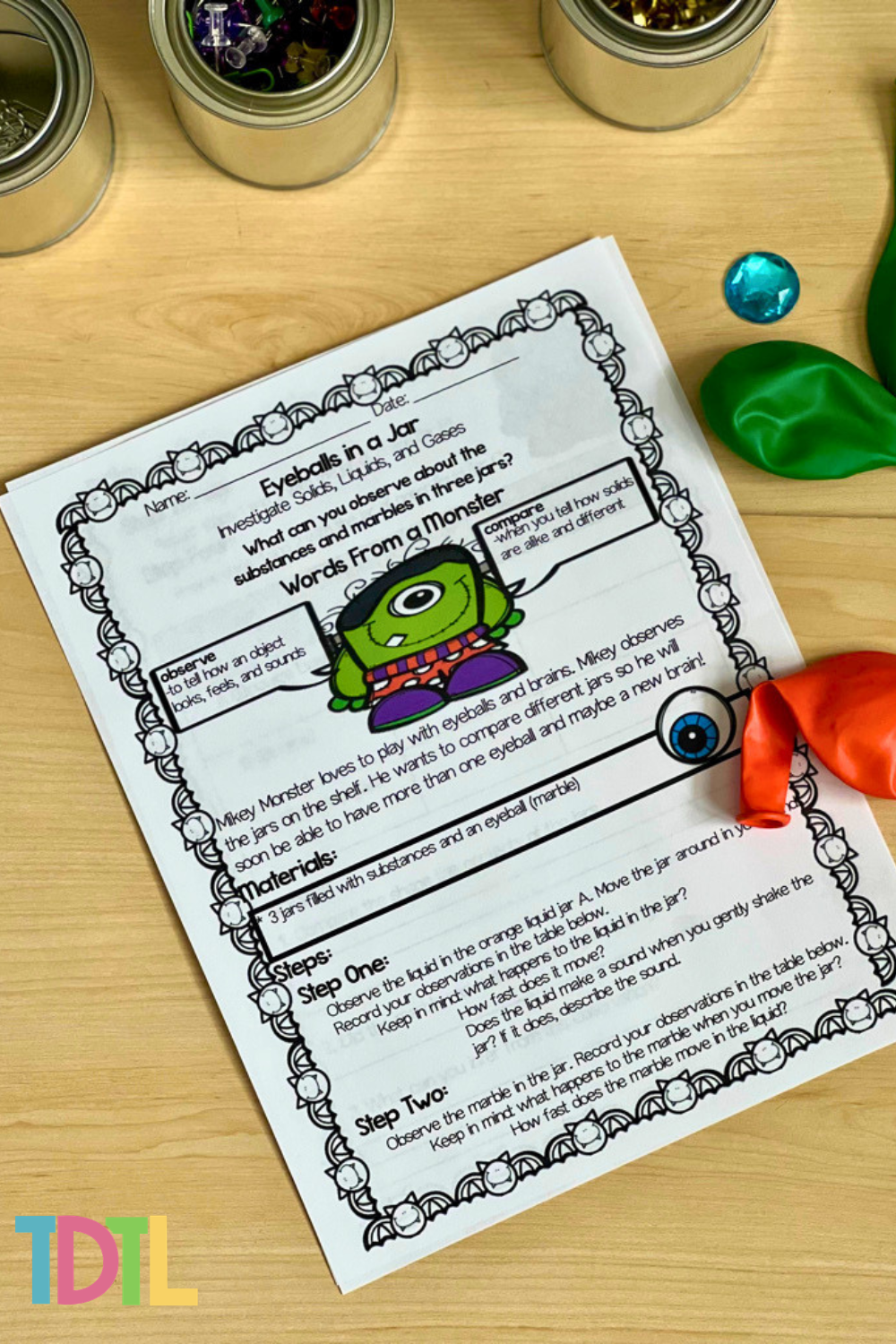
Next up:
Eyeballs in a Jar.
And our eyeballs are marbles, so nobody needs to call me. 😂
For this investigation, you'll need three clear jars. You can make a set for each group or create one set and investigate them together as a class.
Prepare the jars like this:
Jar A: Orange-colored water + marble
Jar B: Cooked spaghetti + marble
Jar C: Vegetable oil + marble
Then let your students observe.
What happens to the marble in each substance?
What do they notice about the different materials?
How are the solids and liquids different?
What properties can they describe?
This is a wonderful opportunity to help children practice something scientists do all the time:
Observe before we explain.
Instead of immediately telling students what they're supposed to notice, give them time.
Let them look.
Let them talk.
Let them compare.
Ask:
What do you notice?
Then follow it with:
What makes you say that?
That second question starts moving children from simple observation toward scientific reasoning.
Halloween Science Activity #3: Wendy Witch Observes Matter
Not every science investigation needs something to explode, fizz, bubble, or fly across the room.
Sometimes science is about noticing carefully.
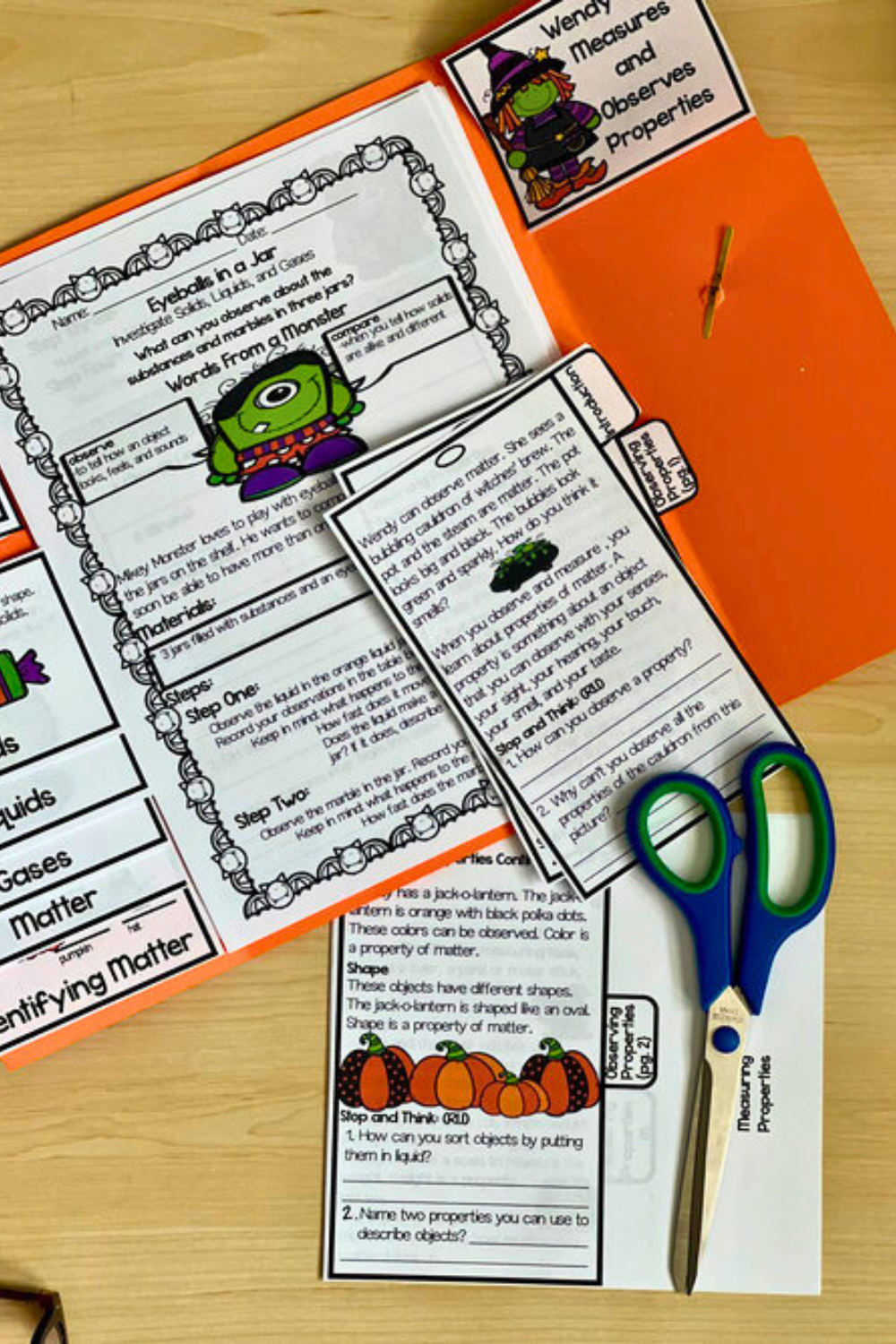
That's the idea behind Wendy Witch.
Give students Halloween-themed examples of solids, liquids, and gases and ask them to observe and describe their properties.
What does it look like?
What can we measure?
Does it keep its shape?
Can it flow?
What happens when we put it in a different container?
This activity may not have the dramatic reaction we sometimes associate with a science experiment.
That's okay.
Children are practicing the habit of looking closely instead of waiting for an adult to tell them the answer.
That's a science skill worth developing long after Halloween is over.
Halloween Science Experiment #4: Frankenstein Investigates Floating and Sinking
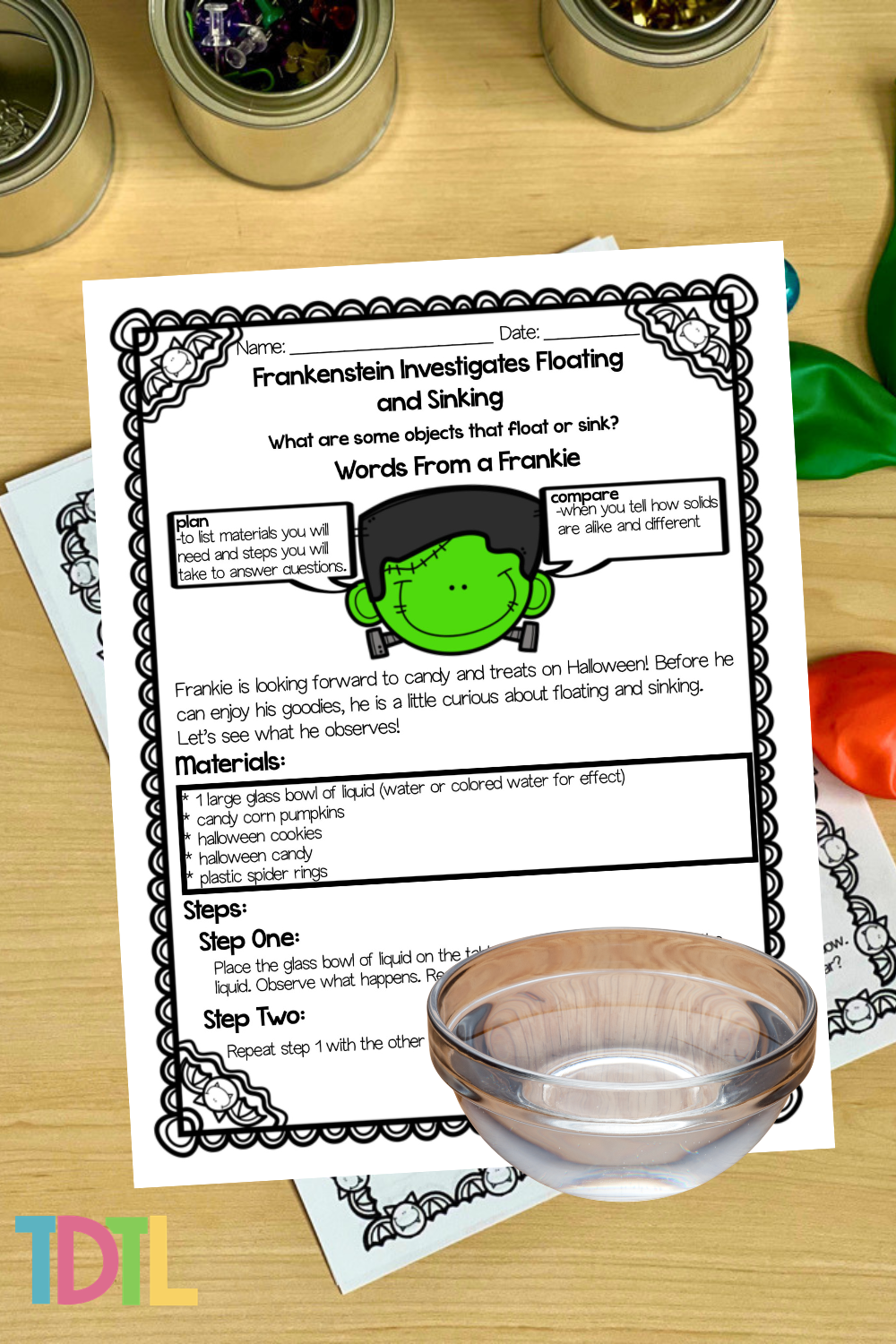
Frankenstein—or Frankie, as I like to call him—has Halloween candy and treats.
But before he enjoys them, he has a question:
What will float and what will sink?
And now we have an investigation.
Gather several Halloween-related objects or treats and a container of water.
Before students place each object into the water, have them make a prediction.
Will it float?
Will it sink?
But don't stop there.
Ask:
Why do you think that?
Then test it.
Observe what happens.
Was the prediction correct?
If not, what did you learn?
This is where I think we need to be careful with elementary science.
A prediction isn't a test question.
If a child predicts that something will float and it sinks instead, she didn't fail the experiment.
She discovered something.
Now she has new information to think about.
That's science.
Bonus Halloween Science: Victor Vampire
If you want to keep going, bring in Victor Vampire.
Victor wants warm strawberry milk on Halloween, but the power has gone out.
Now we have another question involving how matter can change:
What happens to properties when temperature changes?
Again, we've taken a science concept and wrapped it inside a silly Halloween problem.
The silliness gets kids through the door.
The investigation is where the learning happens.
4 Questions to Use With Almost Any Elementary Science Experiment
Here's the part I hope you'll use long after October is over.
You don't need a different teaching routine for every science investigation.
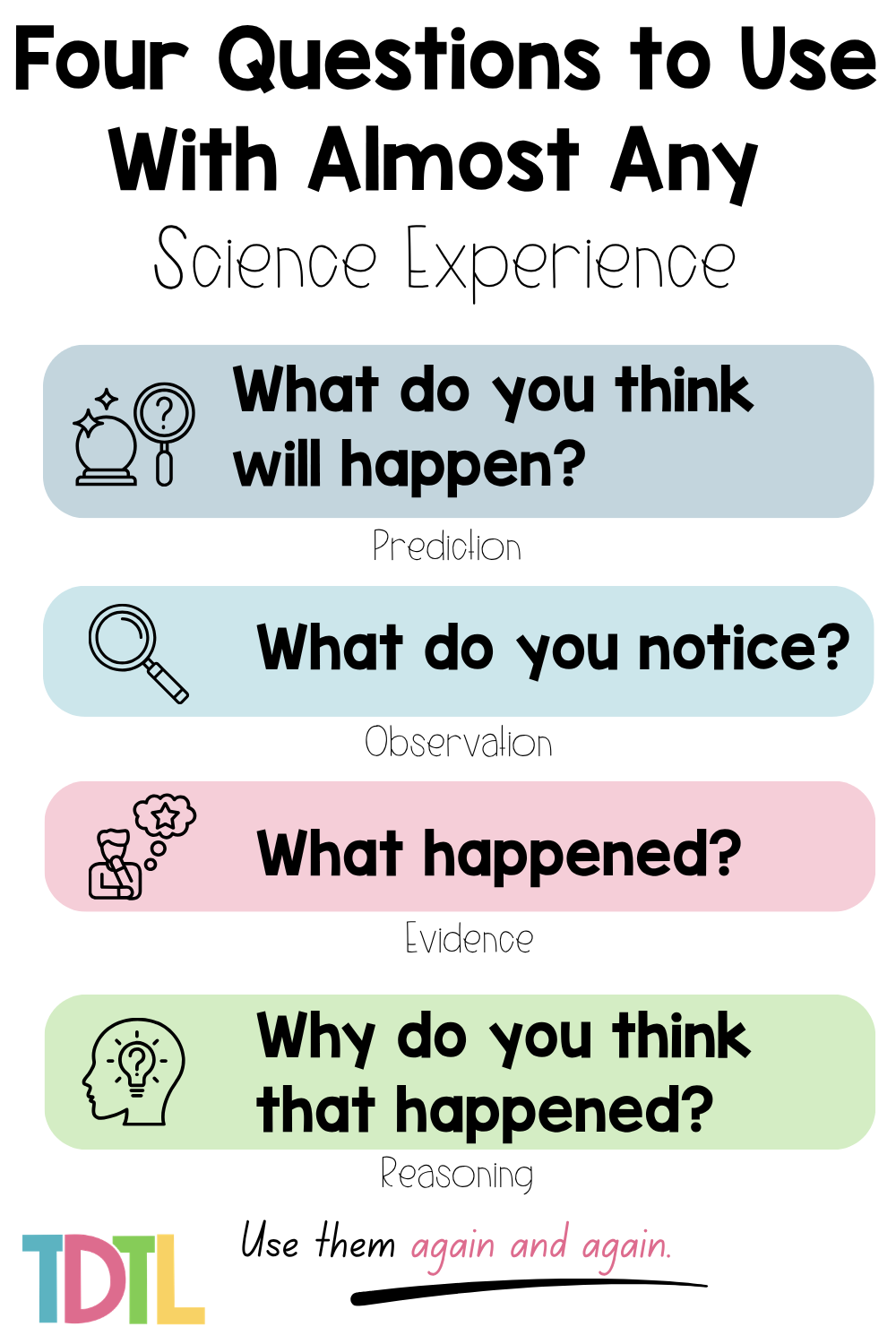
Start with four questions:
1. What do you think will happen?
Prediction
2. What do you notice?
Observation
3. What happened?
Evidence
4. Why do you think that happened?
Reasoning
Use them again and again.
Different materials.
Different science concepts.
Different seasons.
The investigation changes, but the thinking routine stays familiar.
Eventually, something even better begins to happen.
Kids start asking the questions themselves.
That's what we want.
Halloween Science Is Really About Wonder
This month on One Tired Teacher, I've been talking about protecting childhood.
We've talked about making.
We've talked about imagination and play.
This week, I want to protect something else:
Wonder.
You know that moment.
Something unexpected happens during a science investigation.
A child physically moves closer.
Her eyes get huge.
"WAIT."
"Why did it do that?"
Don't rush past that moment.
Sometimes we become so focused on teaching the science standard that we forget this is where scientists actually begin.
Not with an answer.
With a question.
Children don't need us to manufacture wonder for them.
It's already there.
Sometimes our job is simply to give it somewhere to go.
Keep Your Halloween Science Experiments Simple
If you want to bring some Halloween science activities into your classroom this October, you don't need to do all four of these.
Pick one.
Gather a few simple materials.
And instead of worrying about how much information you need to teach before the investigation begins, start with:
What do you think will happen?
Then let them find out.
The explanation can come.
The vocabulary can come.
The nonfiction reading can come.
But first?
Give them something worth wondering about.
And if all you have time for is one whole-class demonstration, that's okay too.
The goal isn't to create an elaborate Halloween science laboratory.
It's to give children another opportunity to notice, question, investigate, and think.
Or Turn Halloween Into a Day of Science
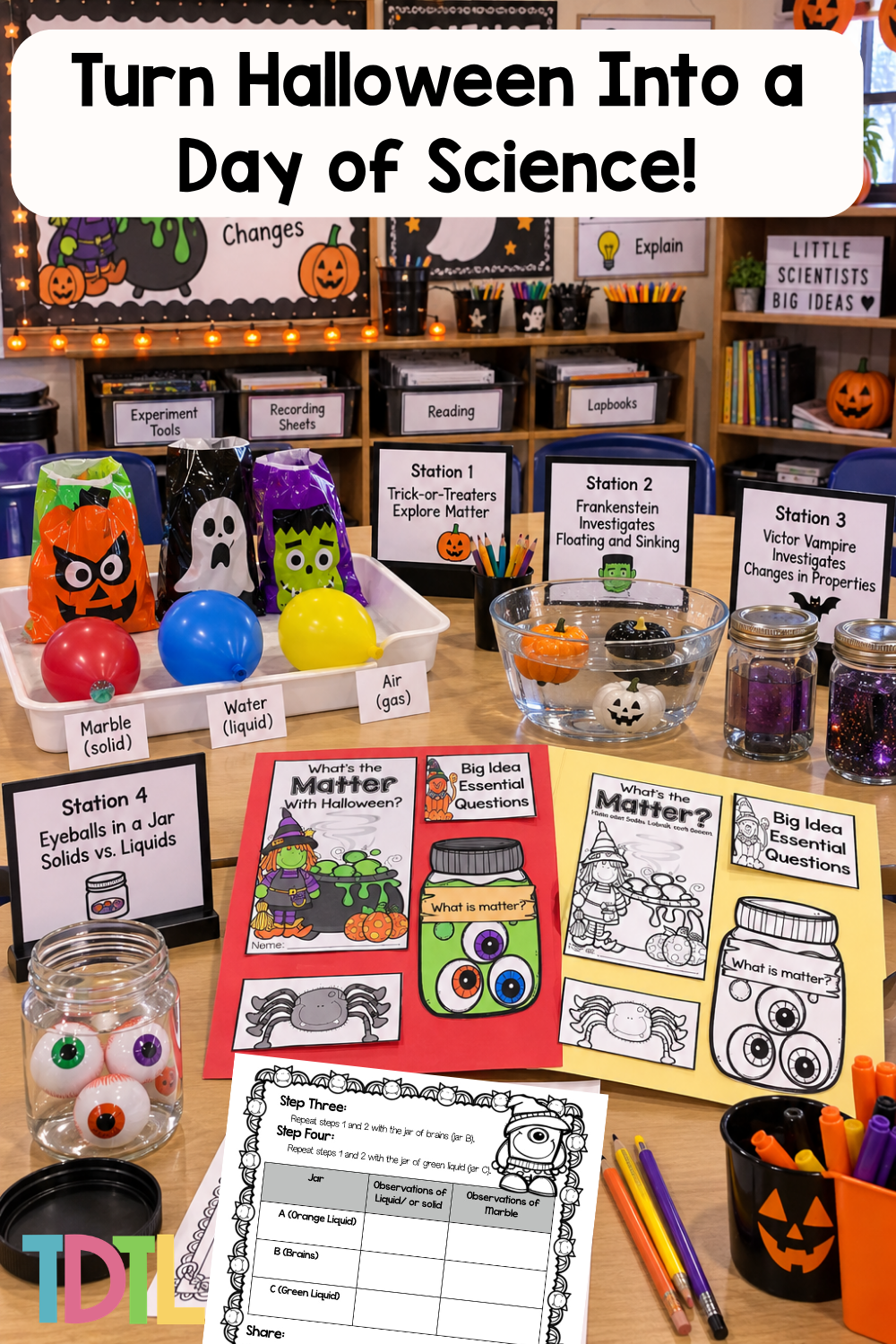
Now, if you're the teacher who wants to go all in, there's another option.
Make Halloween a day of science.
Get out the lab coats.
Or even better, let your kids dress like mad scientists.
Set the spooky stage and spend the day investigating matter.
Honestly, I'd take that over trying to manage another Halloween party any day. 😂
You still have the seasonal excitement kids are craving, but now they're using it to investigate, predict, observe, read, talk, and think.
Want the Halloween Science Experiments Done for You?
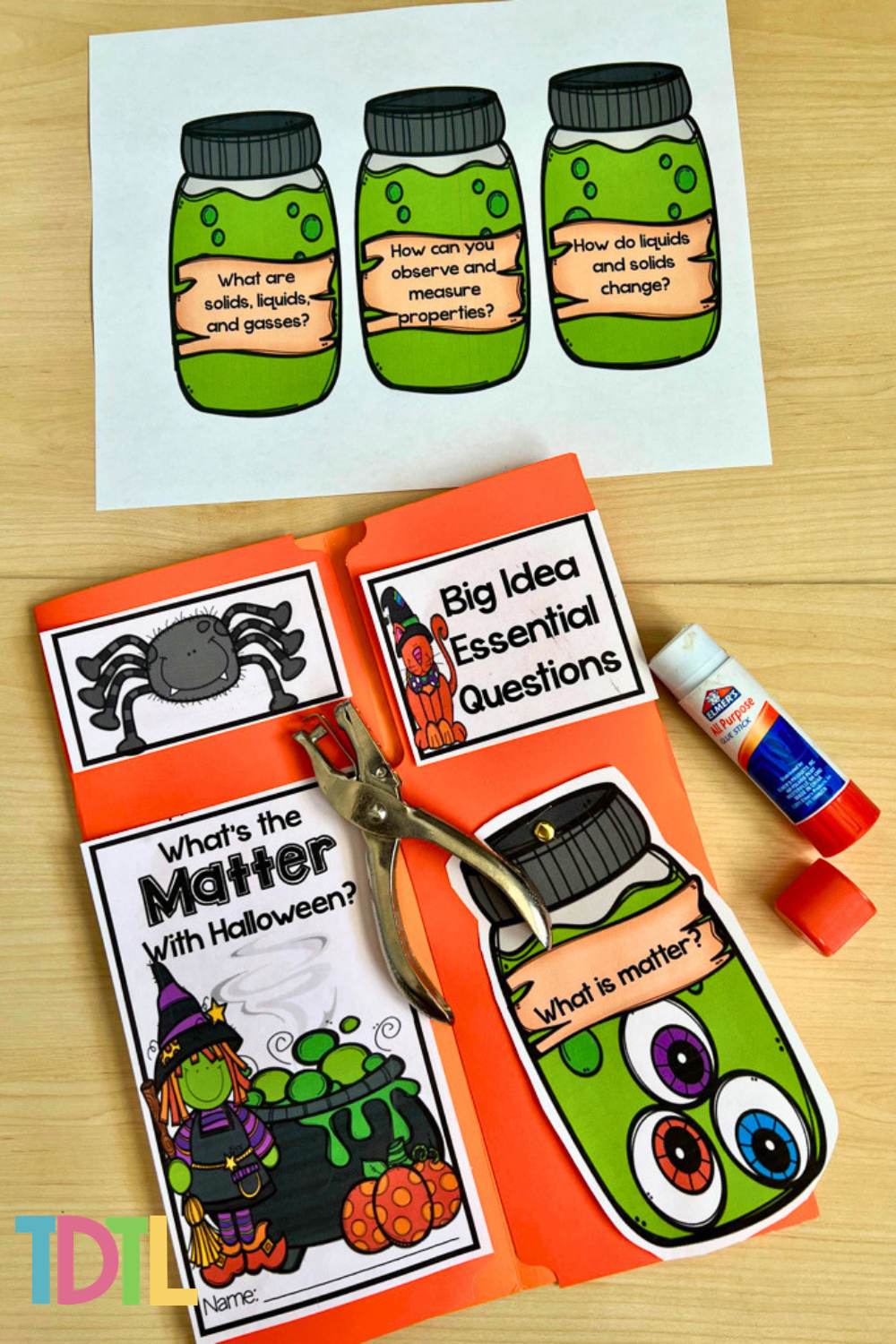
All of these investigations come from my Halloween Science Unit on Matter for second grade.
The complete unit combines hands-on Halloween science investigations with spooky nonfiction reading, vocabulary, and activities that help children explore properties and states of matter.
[LINK: HALLOWEEN SCIENCE UNIT ON MATTER]
So if you'd love to try these experiments but don't want to create the recording pages, readings, directions, and supporting materials yourself, I've already done that part for you.
But you certainly don't need the entire unit to make room for a little science wonder this October.
Choose one idea.
Use what you have.
Use what fits. Leave the rest.
Because sometimes all it takes is a marble, a balloon, a bowl of spaghetti, and one child asking: