


What if, instead of telling your first graders what they're going to learn in science...
you gave them a mystery?
Something happened.
Something changed.
There are clues.
And they have to figure out why.
Because that's when something really interesting happens.
Your students stop waiting for you to give them the science answer.
They start observing.
Questioning.
Looking for evidence.
Testing ideas.
Changing their minds.
In other words, they start thinking like scientists.
And you don't need an elaborate science curriculum or complicated investigation to make that happen.
Sometimes you just need a mystery, some evidence, and permission to let your kids do a little more of the thinking.
What Are Your First Graders Figuring Out?
If you and I were sitting together after school looking at your first-grade science plans, I'd probably ask you one question:
What are the kids figuring out in this lesson?
Not what are you teaching them.
Not what vocabulary words are listed in the standard.
Not which worksheet they're completing.
What are they figuring out?
I've taught science a lot of different ways over the years.
I've read the passages.
Taught the vocabulary.
Made the anchor charts.
Shown the videos.
I've even asked those questions where, if we're being truthful, I already knew exactly what answer I wanted the kids to give me. 😂
None of those things are necessarily bad.
Children need information, vocabulary, and background knowledge.
But there's a difference between knowing about science and doing science.
Scientists don't begin an investigation by saying:
"Today I will learn these six vocabulary words and answer questions 1–5."
They notice something.
They wonder about it.
Something doesn't make sense.
They ask questions.
Gather evidence.
Test ideas.
And sometimes they're wrong.
So they change what they think.
That's science.
And six- and seven-year-olds are remarkably good at it.
They already spend half their lives asking us:
WHY?
Maybe we should use that.
What If First Grade Science Started With a Mystery?
This question led me to create a science structure I've been calling Little Science Detectives.
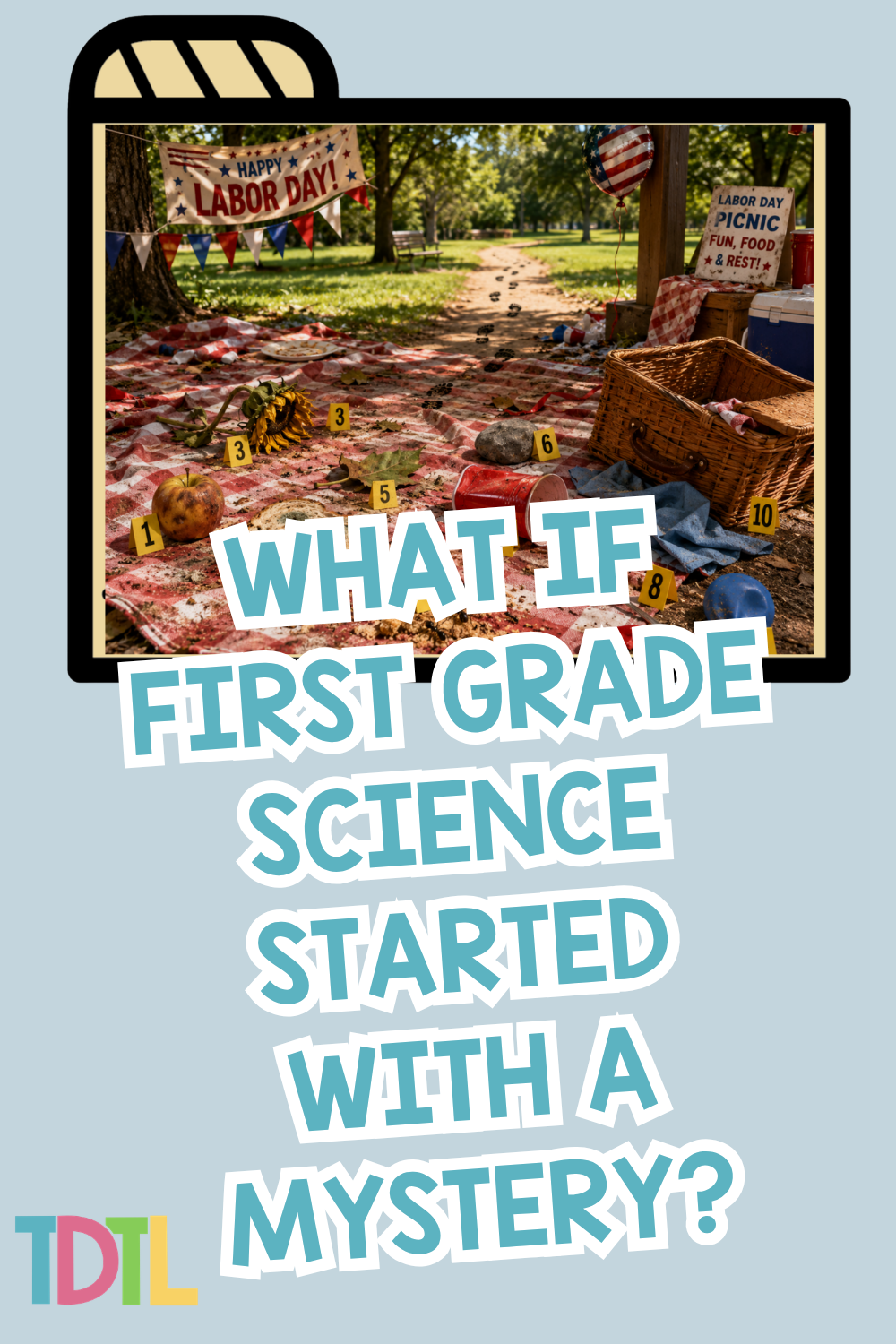
The first case I created was The Mystery of the Forgotten Labor Day Picnic.
The children discover a picnic that was accidentally left outside over the long weekend.
But something happened while everyone was gone.
Some things changed.
Others didn't.
There's a wilted flower.
Bread has changed.
Ants have found the crumbs.
There are leaves, rocks, and plastic objects.
Instead of beginning the lesson by telling children the characteristics of living and nonliving things, we begin with:
What do you notice?
What changed?
What didn't?
Why?
Suddenly, children have a reason to learn the science.
They need information because there's something they want to explain.
That's a very different relationship with information.
The Detective Hat Isn't Doing the Teaching
Here's the important part.
You don't need to turn every first-grade science lesson into an elaborate detective unit.
The detective theme is fun.
But, as I said on the podcast:
The detective hat isn't doing the teaching. 😂
It's the structure underneath it.
Little Science Detectives is really the scientific thinking process disguised as a mystery.
And you can borrow that structure for almost any science topic.
Here's how.
1. Open the Case File
Start with something children need to figure out.
It could be a mystery.
A photograph.
Something that changed.
An unexpected observation.
A strange object.
A question.
A short scenario.
Instead of beginning a lesson with:
"Today we're learning about force and motion."
Imagine telling your first graders that several pumpkins somehow traveled across the school courtyard.
How did they move?
What made them stop?
Why did one travel farther than another?
Now there's a reason to investigate.
Give them something worth wondering about.
2. Examine the Evidence
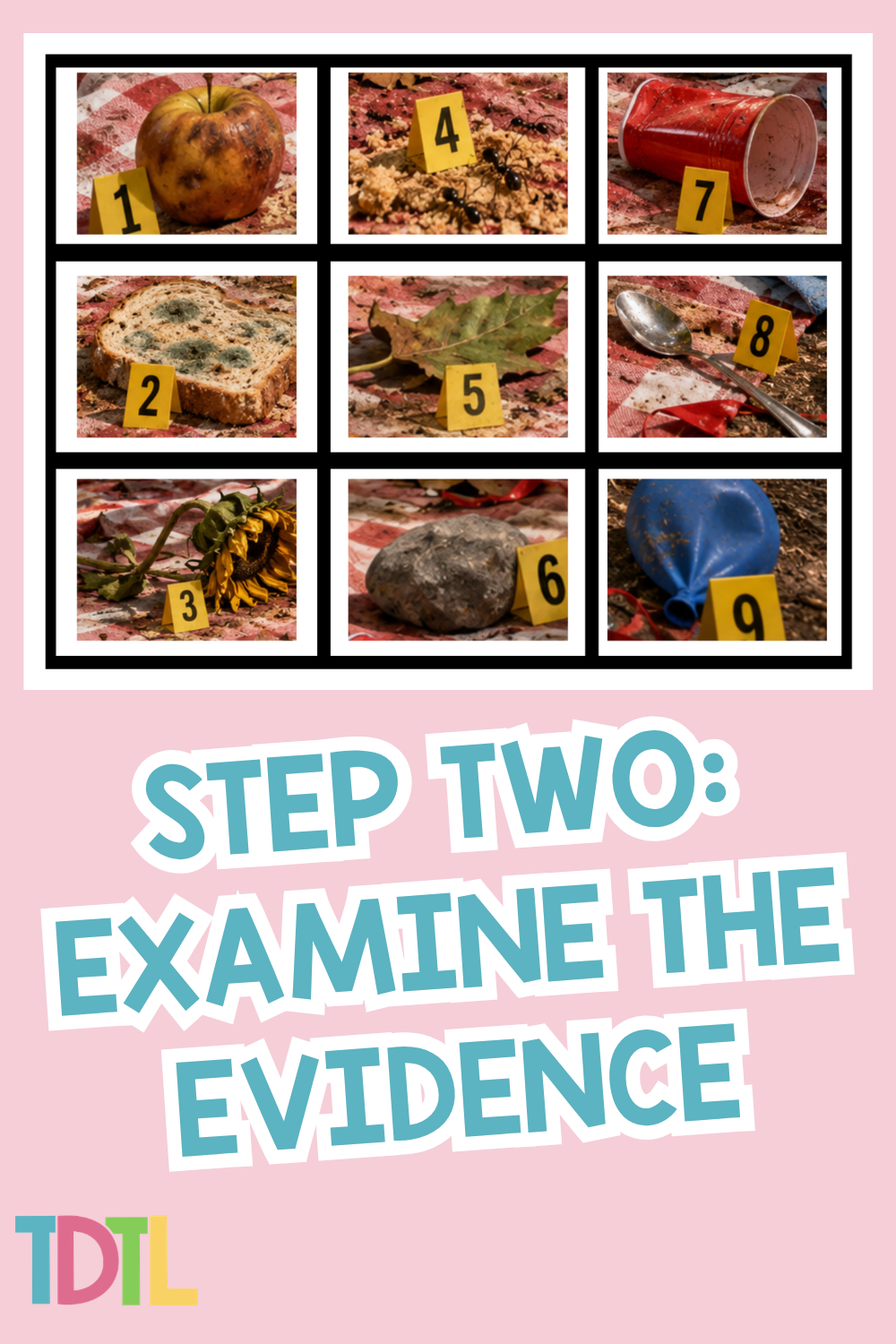
This might be the hardest part for us as teachers.
Resist explaining.
Let the kids look first.
Give them photographs, real objects, clue cards, or observations.
Then ask:
What do you notice?
What do you wonder?
What do you think might have happened?
And when they offer a theory, don't immediately announce whether it's right or wrong.
Let their ideas live for a little while.
Scientists don't begin an investigation already knowing the answer.
Our kids don't always have to either.
3. Research the Clues
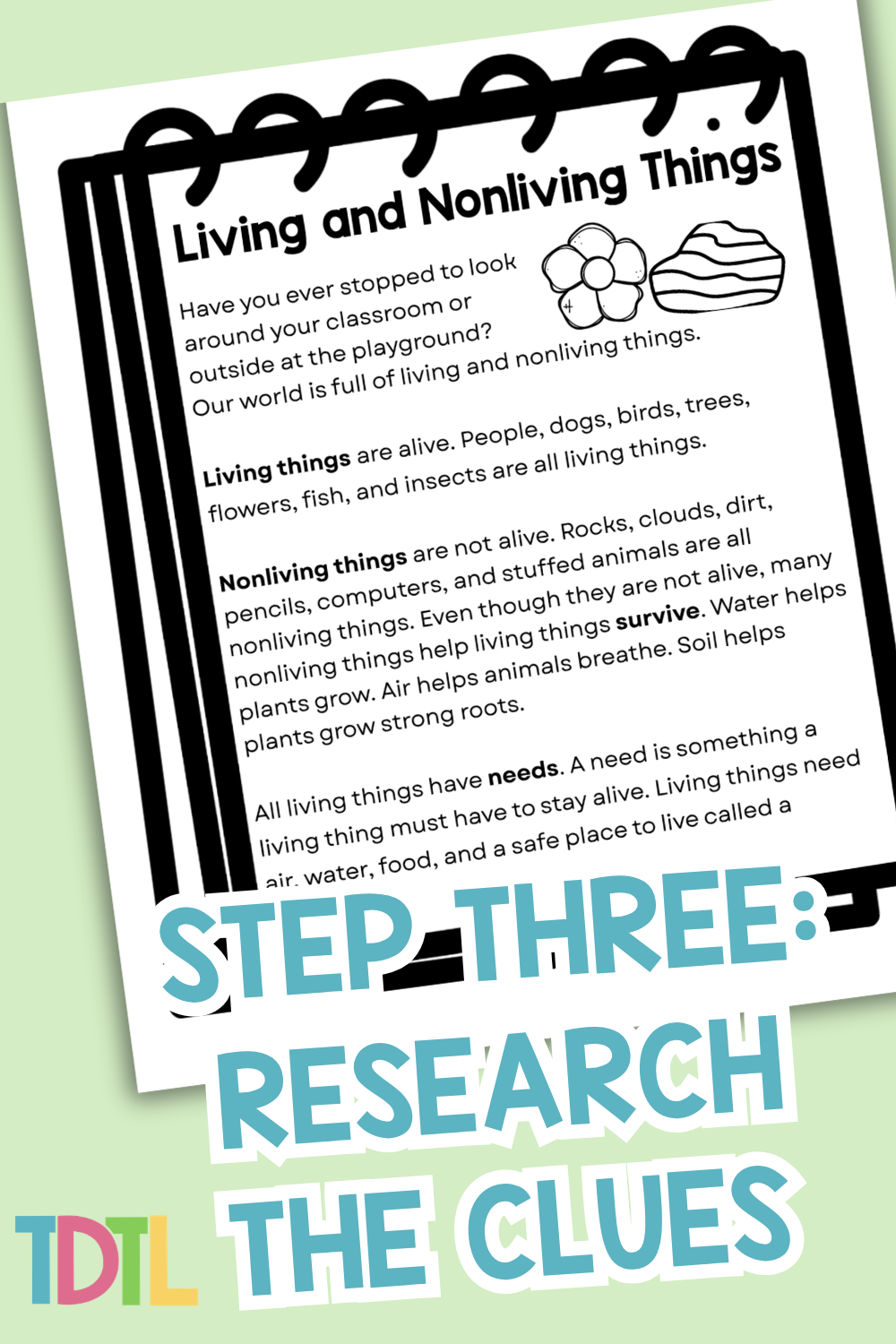
Now bring in the information.
This is one of my favorite places to integrate reading and science.
Read the nonfiction passage.
Introduce important vocabulary.
Pull out a picture book.
Watch a short video.
Use your science text.
But there's a difference now.
Children aren't reading simply because we told them to read.
They're looking for evidence.
Suddenly, someone notices:
"WAIT! It says living things need water!"
And someone else remembers that wilted flower from the picnic.
Now the reading has a job to do.
4. Let Kids Investigate Like Scientists
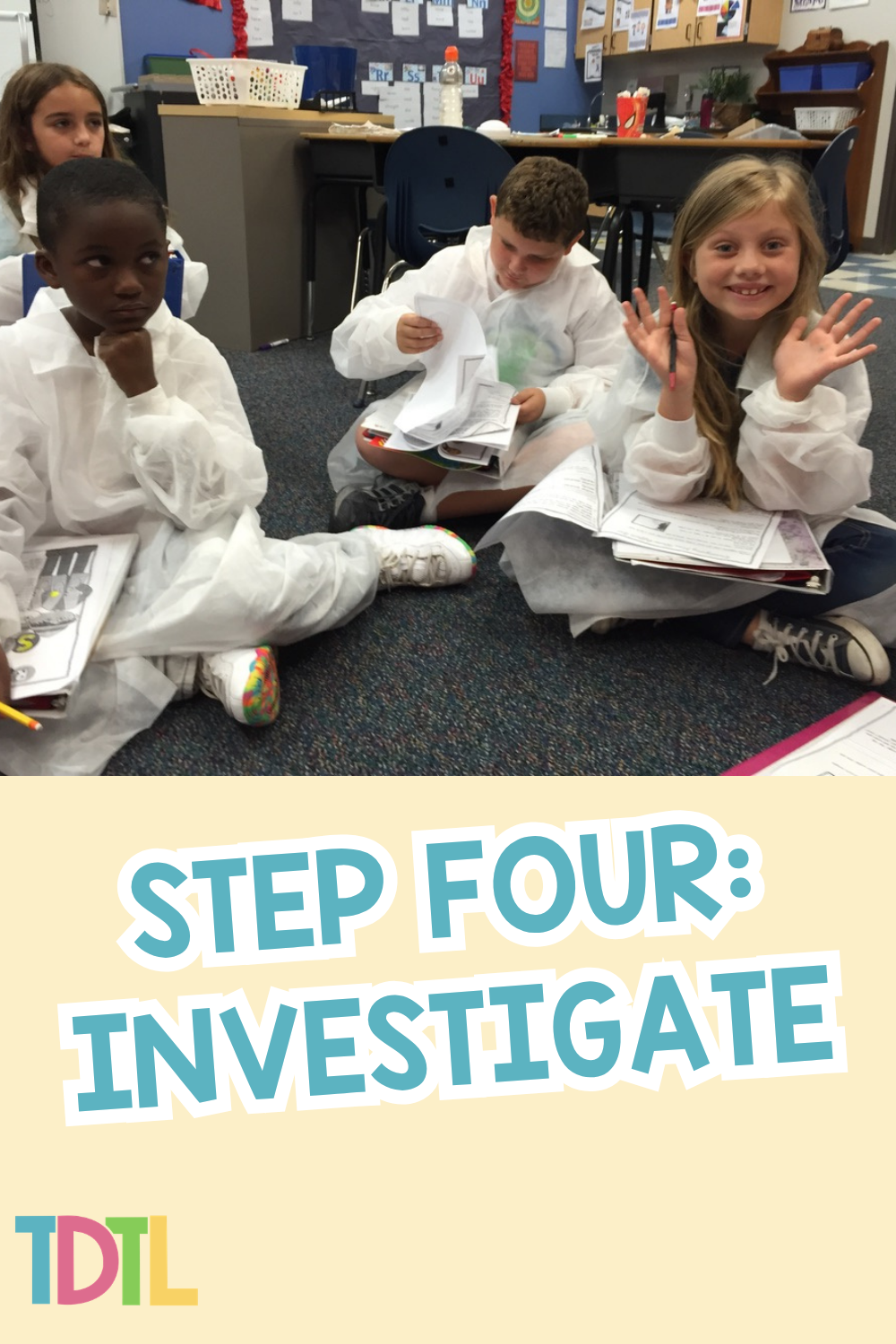
Next, give students something they can actually investigate.
In my living and nonliving mystery, students examine real objects like rocks, sticks, leaves, pinecones, feathers, acorns, plants, and plastic objects.
They observe.
Compare.
Sort.
Look closely with magnifying glasses.
But again, try not to tell them exactly what they're supposed to discover.
Let them find patterns.
Let them talk about what they're noticing.
Let them disagree.
Let them change their minds.
One of my favorite things about teaching science to young children is that they notice things we don't.
Give them time to do it.
5. Solve the Case With Evidence
Eventually, return to the original mystery.
Ask:
What do you think happened?
Then add the question that changes everything:
What evidence supports your thinking?
You don't need an elaborate claim-evidence-reasoning lesson with six-year-olds.
Keep it simple:
I think ______ because I observed ______.
That's enough.
We're beginning to teach children that an answer isn't simply something they give the teacher.
Their ideas should be supported by evidence.
And that's a thinking skill that goes far beyond first-grade science.
6. Engineer a Solution
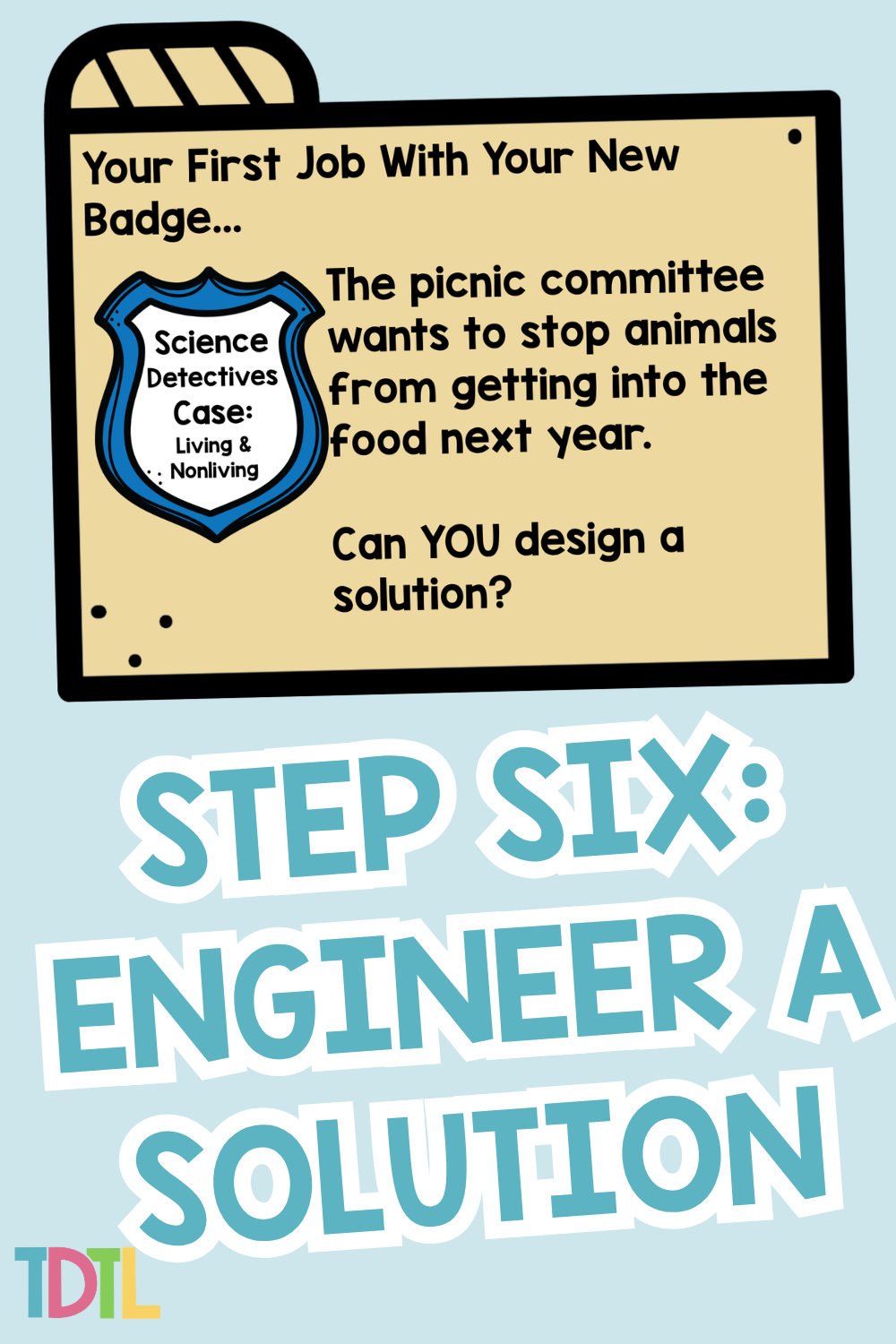
You know I couldn't resist adding STEM. 😂
Once children understand the science, ask:
Can we use what we learned to solve a problem?
In the Forgotten Labor Day Picnic mystery, students eventually think about how they could keep animals from getting into the food at a future picnic.
Now science becomes engineering.
What did we learn?
How can we use that knowledge?
What could we create?
And suddenly children are making, planning, building, testing, and problem-solving.
They're not simply learning a science concept.
They're using it.
How to Create Your Own First Grade Science Mystery
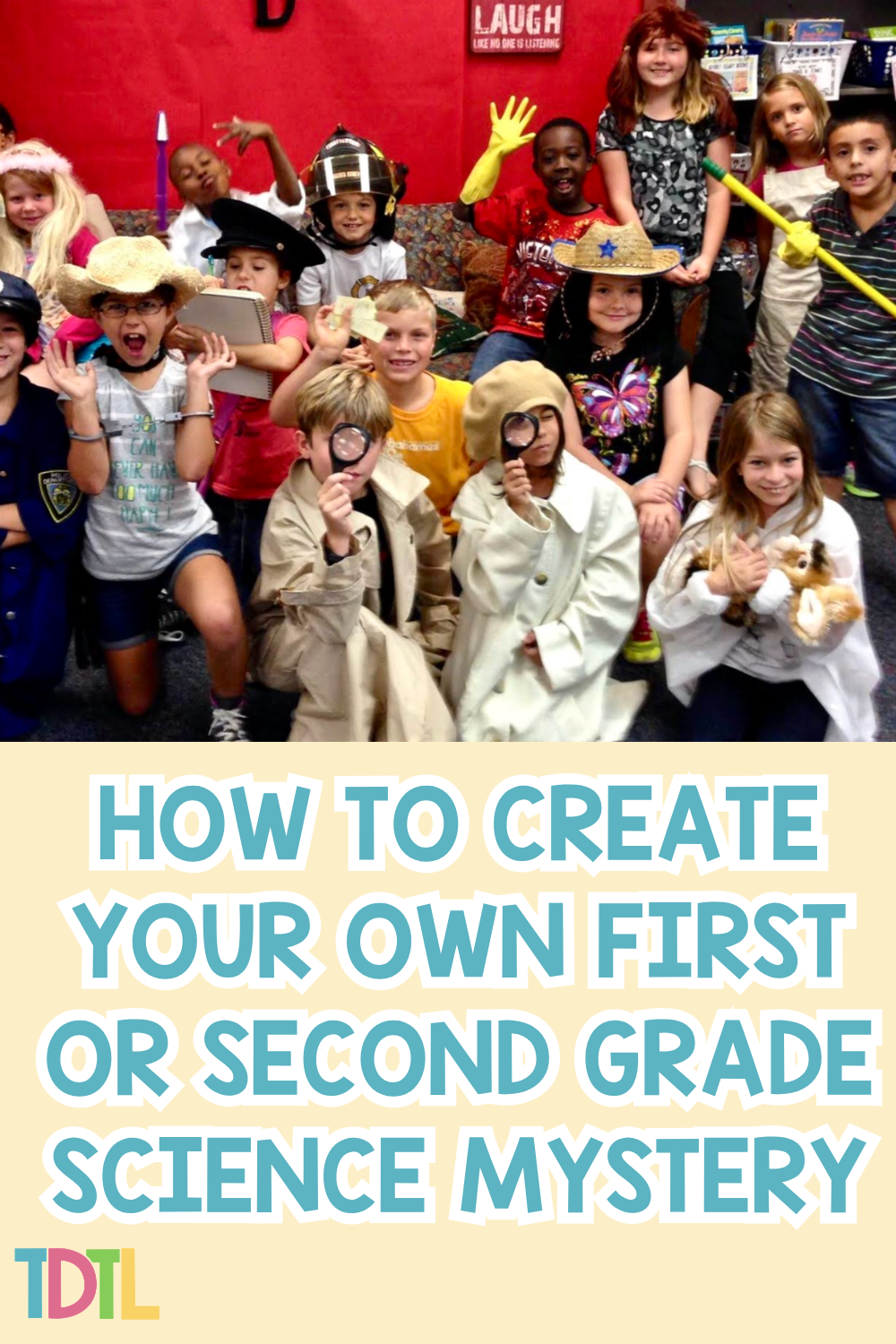
This is the part I really want teachers to hear:
You can use this structure without buying anything.
Look at the science concept you're teaching next week and ask yourself:
What could be mysterious about this?
Teaching weather?
What changed outside overnight?
Teaching plants?
Why did one plant grow while another didn't?
Teaching light?
Why can we see an object in one location but not another?
Teaching force and motion?
Maybe some pumpkins mysteriously went flying. 😂
You don't need 75 slides, detective badges, special notebooks, or an elaborate storyline.
Start with a question.
Give children something to observe.
Let them gather information.
Let them investigate.
Then ask them to explain what they think happened using evidence.
That's the heart of Little Science Detectives.
Hands-On First Grade Science Doesn't Mean Lowering Expectations
This matters to me.
When we talk about play, exploration, curiosity, and hands-on learning in the primary grades, sometimes those things are treated as though they're less rigorous.
I don't think they are.
We're actually asking children to do something incredibly important.
Think.
We're saying:
I don't need you to sit quietly while I tell you everything I know.
I want to know what you notice.
What you think.
What questions you have.
What evidence you found.
And whether your thinking changed.
That's not avoiding serious learning.
That is serious learning.
Try Changing Just One Science Lesson
If you're teaching science in first grade, you don't have to overhaul your science block.
Try changing one lesson.
Instead of beginning by telling students what they're going to learn, start with something they need to figure out.
Open the case.
Give them evidence.
Let them wonder.
Bring in information when they need it.
Let them investigate.
Then ask:
What do you think happened—and what makes you think that?
You might be surprised by how much thinking six- and seven-year-olds can do when we stop doing quite so much of it for them.
And please don't hear any of this and think:
"Great. Now Trina wants me to turn every science standard into a 97-page murder mystery." 😂
No.
Please don't.
A mystery can be one photograph.
One strange observation.
One question written on the board:
Why did this happen?
That's enough.
The goal isn't to make science look like a mystery.
The goal is to give children something worth investigating.
Want to Try Little Science Detectives?
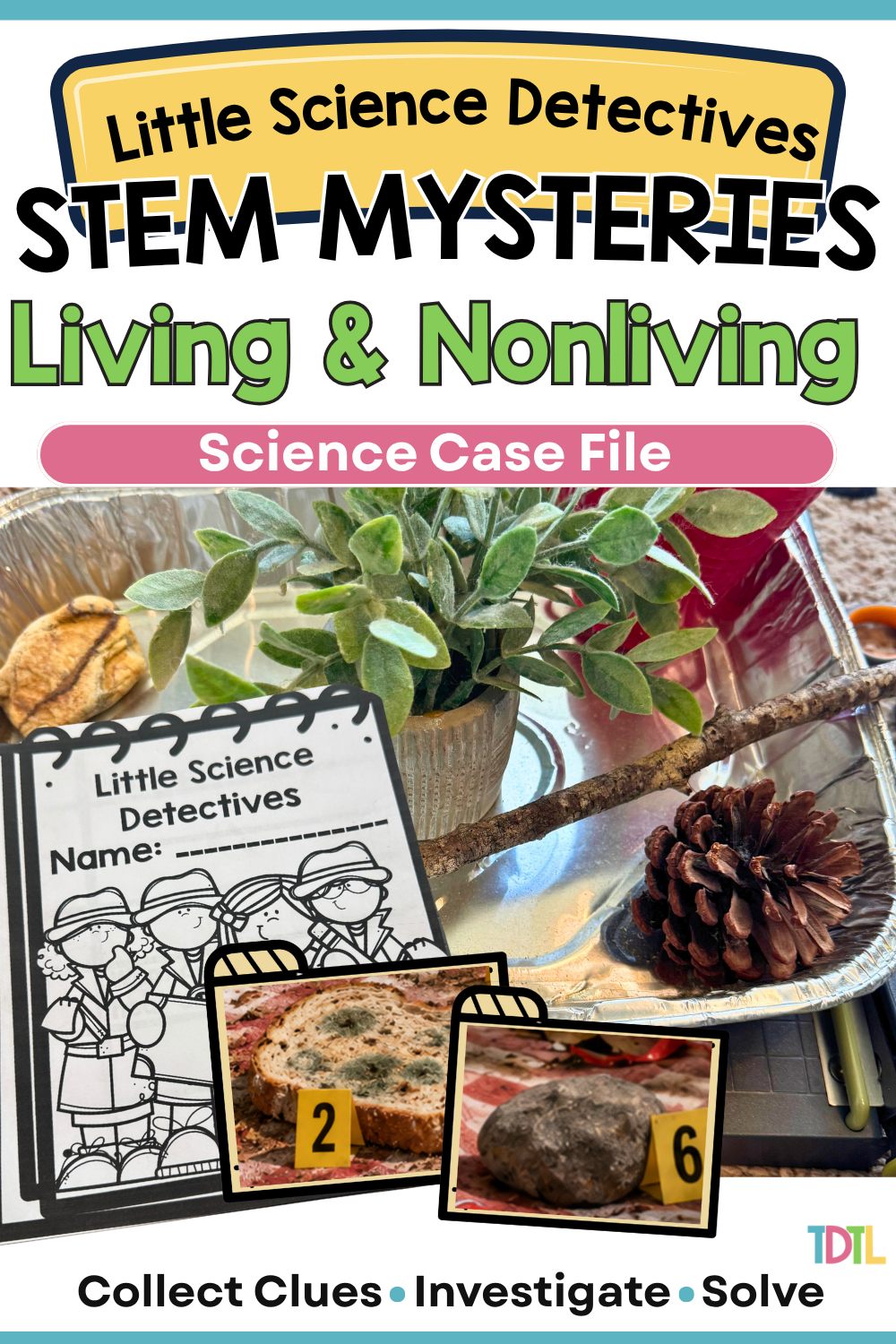
If you're thinking:
"Okay, Trina. I love this, but I don't particularly want to write the mystery, make the slides, create evidence cards, design detective notebooks, write the reading passages, plan the investigation AND create an engineering challenge..."
I understand. 😂
That's why I'm creating the Little Science Detectives series.
The first case, The Mystery of the Forgotten Labor Day Picnic, focuses on living and nonliving things for first and second grade.
The investigation includes the case file, teaching slides, evidence, science detective notebooks, informational reading, hands-on investigations, solving the case, and a STEM engineering challenge. Teachers can even choose to have children investigate before researching if they want students exploring before receiving the content.
[LINK: THE MYSTERY OF THE FORGOTTEN LABOR DAY PICNIC]
And my newest case is The Mystery of the Flying Pumpkins, which explores force and motion through another science mystery.
[LINK: THE MYSTERY OF THE FLYING PUMPKINS]
If having everything ready to go would make teaching science easier, I'll have those resources waiting for you.
But if you'd rather make your own?
Steal the structure.
Seriously.
Take it.
I want more little science detectives in classrooms.
Because underneath all of this is one idea I think is worth protecting:
Children deserve to participate in their learning.
Not just receive it.
Not just consume it.
Not just complete it.
Participate in it.
So the next time one of your first graders leans over the table, studies something carefully, looks up at you and says:
"WAIT. I think I know what happened..."
don't give them the answer.
Ask:
"What evidence do you have, Detective?"
And listen.
