Halloween STEM Projects for Elementary Students That Start With a Story
If you're looking for Halloween STEM projects for elementary students, try this before you start searching for another October activity.
Go look at your classroom bookshelf.
Seriously.
Some of your favorite Halloween picture books already have STEM challenges hiding inside them.
A monster needs something.
A turkey has a problem.
A dinosaur is trying to navigate Halloween with ridiculously tiny arms.
A pumpkin could become...well, just about anything.
Instead of beginning with a project and deciding exactly what every child will make, we can begin with the story.
Then give children the problem and ask:
What could YOU create?
That's where the thinking begins.
Why Halloween Stories Work So Well for STEM
Halloween might be one of my favorite times of year for Storybook STEM because Halloween stories are wonderfully ridiculous.
We have monsters under beds.
Skeletons coming to dinner.
Dinosaurs trick-or-treating.
Turkeys wearing costumes.
And pumpkins becoming things pumpkins have absolutely no business becoming. 😂
Children don't need much convincing to enter that world.
They're already there.
And I think we sometimes underestimate what is happening when children are completely invested in an imaginary problem.
They're planning.
Making decisions.
Testing ideas.
Using materials in new ways.
Solving problems.
Thinking critically.
Yes, a monster who needs a haircut may take us a step away from solving a real-world engineering problem.
But for our youngest learners, I think of it a little like training wheels.
The problem may be pretend. The thinking isn't.
10 Halloween Stories That Can Become STEM Projects
You absolutely do not need ten new books for this.
Look through this list and find one you already own, already read, or know your students love.
Then start there.
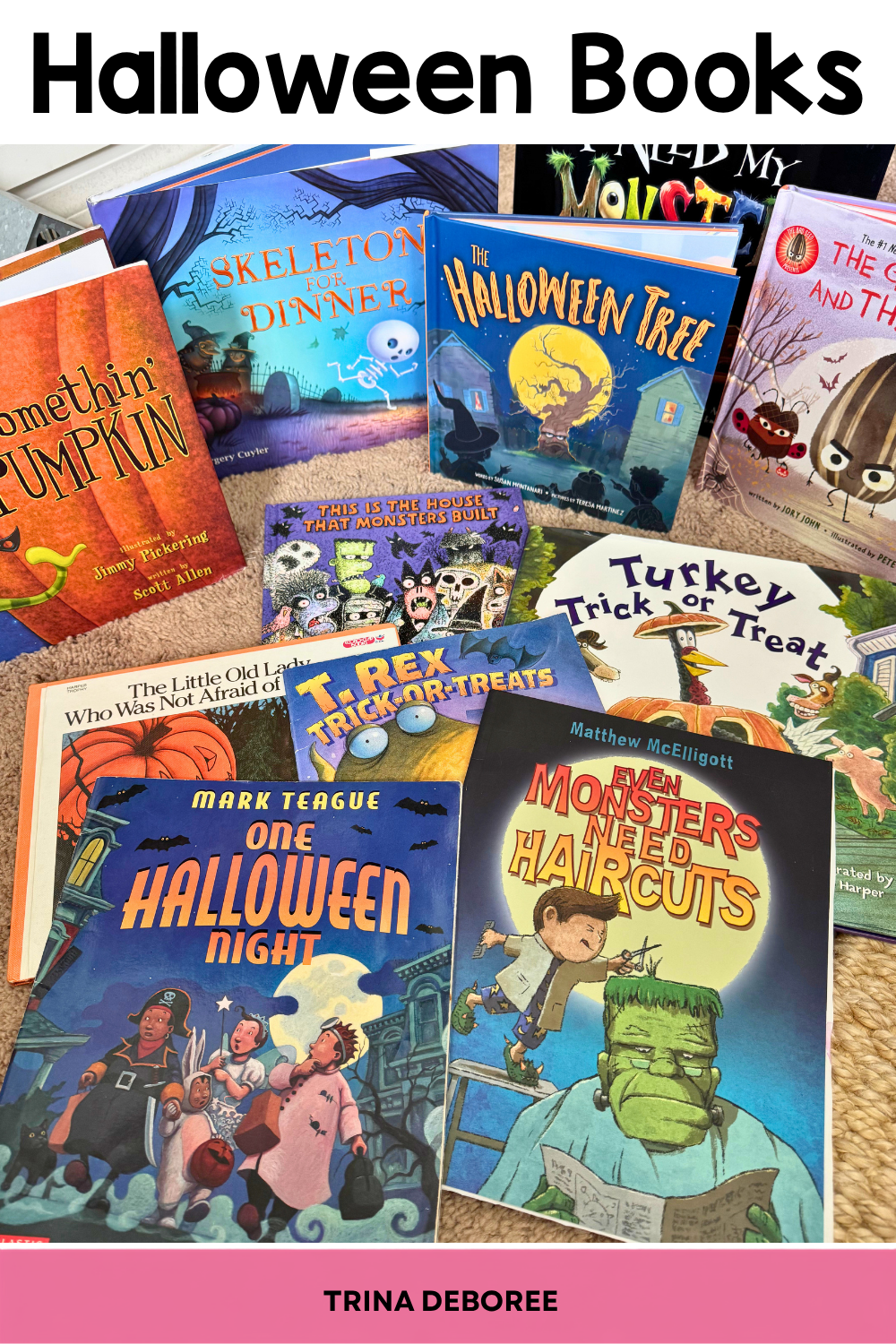
1. I Need My Monster by Amanda Noll
A child's monster is gone, and the replacement monsters aren't quite right.
There's our invitation.
What does the perfect monster need? Could students design a habitat for a monster? Could they create something that helps a monster do its job?
Don't decide for them.
Let the story create the questions.
2. Skeleton for Dinner by Margery Cuyler
Skeletons, a dinner invitation, and a misunderstanding give us all kinds of possibilities.
Students might discover a problem involving designing, building, transporting, or helping one of the characters.
Let them decide which problem is worth solving.
3. This Is the House That Monster Built by Steve Metzger
The word built is practically waving at us. 😂
What would a monster need in a house?
Would the same house work for every monster?
What if your monster had no legs? Or was enormous? Or had some other characteristic that required students to rethink their design?
Now we're getting into some interesting engineering.
4. Somethin' Pumpkin by Scott Allen
This is one of my favorites because it opens the door to a wonderfully simple question:
What else could a pumpkin become?
We'll come back to this one in a minute because it's a perfect example of turning a Halloween read aloud into an open-ended STEM challenge.
5. Turkey Trick or Treat by Wendi Silvano
Turkey wants to participate in Halloween, which gives us costumes, disguises, inventions, and plenty of potential problems to solve.
What does Turkey need?
Let your students figure it out.
6. The Little Old Lady Who Wasn't Afraid of Anything by Linda Williams
Those moving pieces of clothing are practically begging children to figure out what they could become or how they could work together.
This is another wonderful example of letting the book provide the context without prescribing what students ultimately create.
7. T. Rex Trick or Treats by Lois G. Grambling
A T. rex trying to navigate Halloween?
We've got problems.
Those tiny arms alone could keep a room full of six-year-olds designing for an afternoon. 😂
What could children create to solve a problem for T. rex?
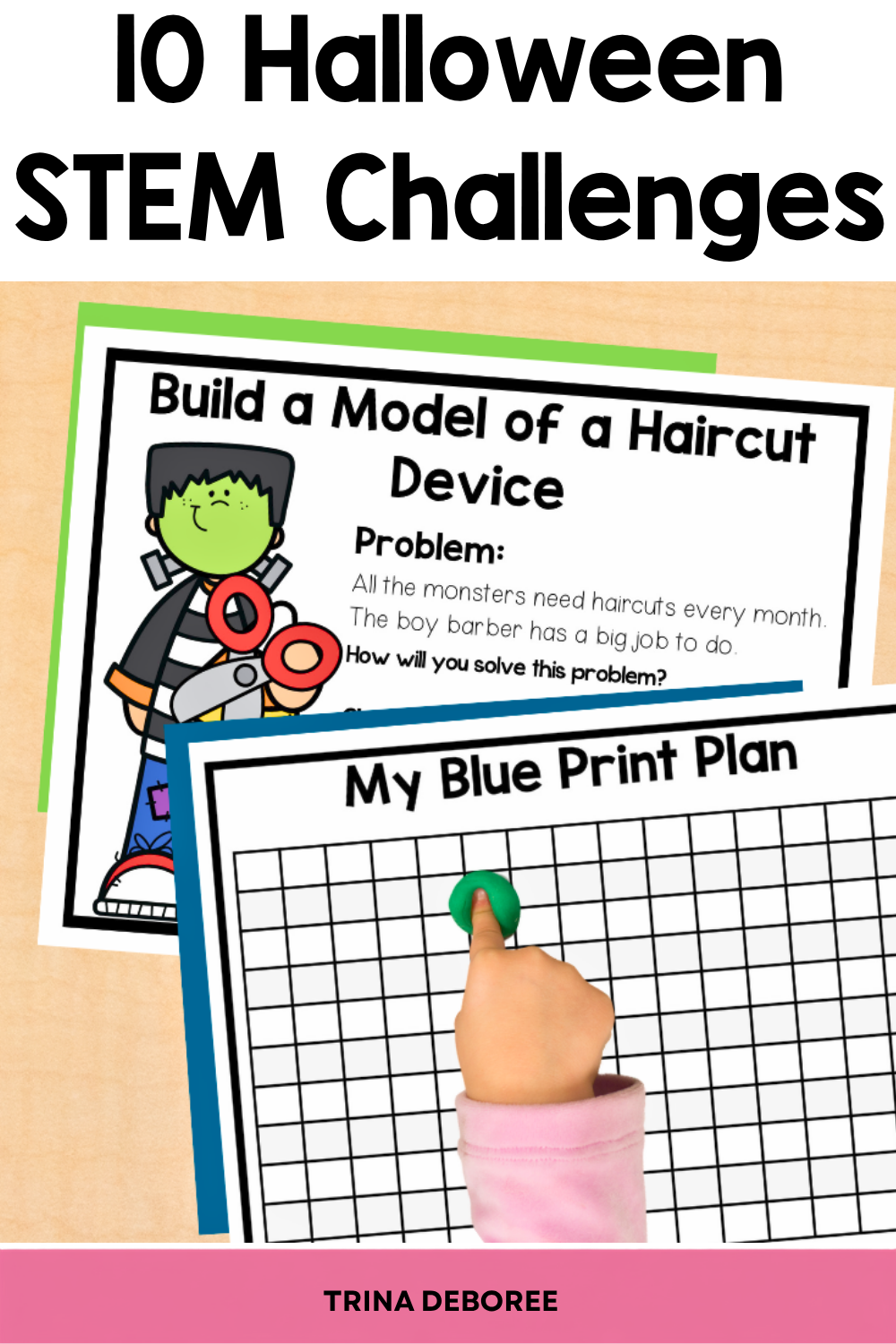
8. Even Monsters Need Haircuts by Matthew McElligott
How exactly do you cut a monster's hair?
What would a haircutting device need if your customer had enormous ears?
Horns?
Multiple heads?
Something else entirely?
That's an engineering problem waiting to happen.
9. One Halloween Night by Mark Teague
This imaginative Halloween world is filled with possibilities.
Instead of choosing the STEM problem yourself, look at the problems the characters encounter and ask children:
Which one would you like to solve?
10. The Halloween Tree by Susan Montanari
A Halloween tree gives children another opportunity to think about structure, design, and what something could become.
And remember: you don't need to turn every page of every Halloween book into a STEM challenge.
We're looking for the invitation.
How to Turn a Halloween Story Into a STEM Challenge

Let's use Somethin' Pumpkin as an example.
I love playing with this idea:
A pumpkin doesn't have to be just a pumpkin.
So what else could it become?
Maybe pumpkins could solve problems.
A pumpkin might become a tiny house for a critter.
Someone might create an entire pumpkin apartment complex.
Another child might decide pumpkins need to be transported and build a cart that can carry pumpkins or other materials.
And another child might invent something neither of us would ever have imagined.
That's exactly what we want.
Instead of saying, Today everyone is making a pumpkin cart, give children the broader problem:
How could you use a pumpkin to create something that solves a problem?
Now the thinking belongs to them.
A Simple 5-Step Halloween STEM Process
You can use the same process with almost any Halloween picture book that offers a natural problem or possibility.
1. Read the Story
Let children experience the book first.
Don't interrupt the read-aloud every two minutes to explain the STEM challenge that's coming later.
Let them enjoy the story.
2. Find the Possibility
Afterward, start wondering together.
What happened in the story?
What does a character need?
What isn't working?
What could be better?
What could become something else?
You aren't necessarily looking for one predetermined answer.
You're looking for possibilities.
3. Ask the Kids
This is the important part.
Don't solve the problem for them.
Ask:
What could we do?
With Somethin' Pumpkin, that might sound like:
Here's your pumpkin. What could it become? What problem could it solve?
Then listen.
4. Let Them Plan
Before everyone dives headfirst into the building materials, give children a little time to think.
What is your idea?
What will it do?
Who will it help?
What materials might you need?
A quick sketch or simple blueprint is enough.
We're not trying to turn this into a 14-page planning packet before they're allowed to touch anything.
5. Build
Now give them simple materials and let them go.
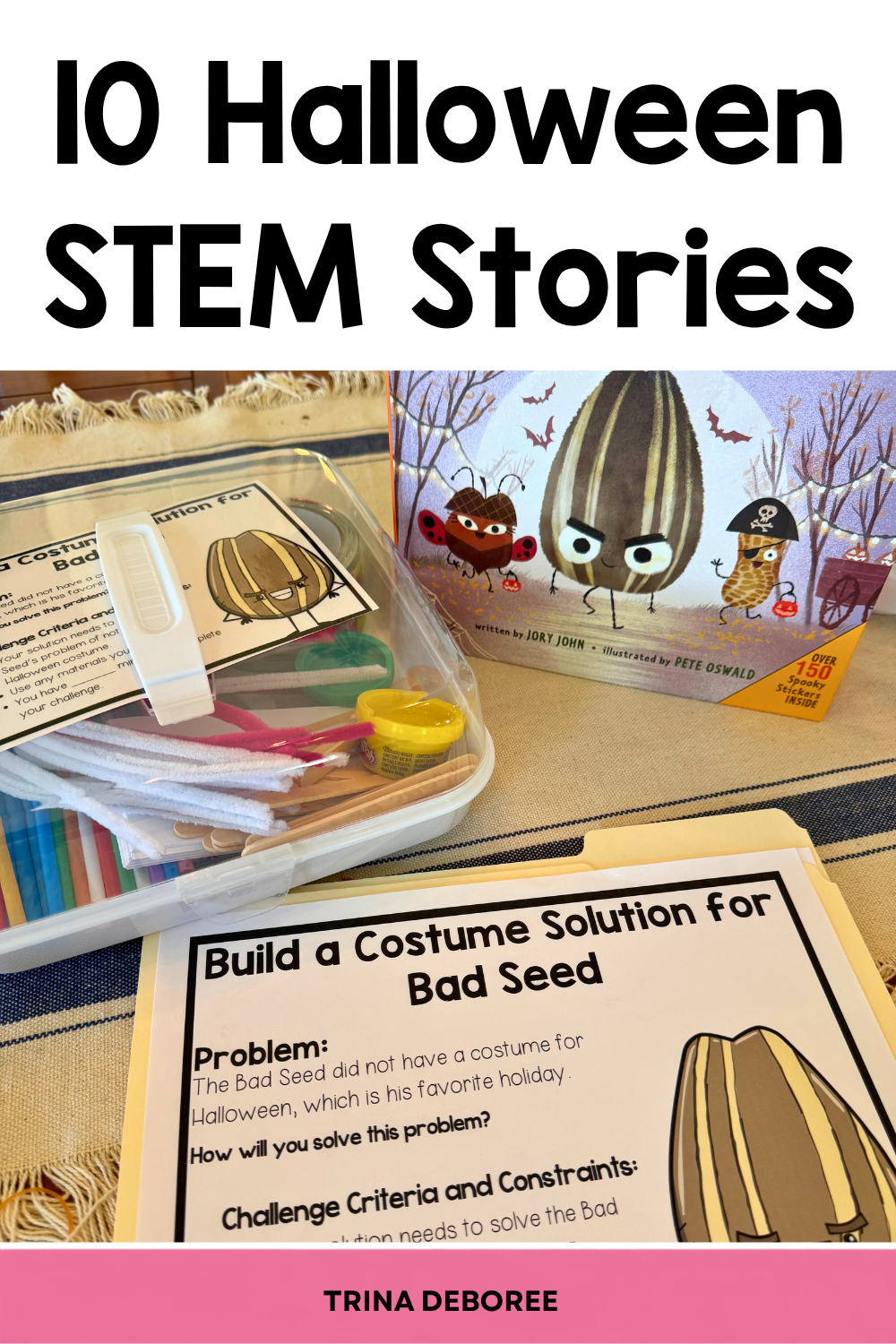
For the pumpkin challenge, I love using those little candy pumpkins along with craft sticks, index cards, pipe cleaners, straws, Play-Doh, cardboard, and tape.
Use whatever you have.
Then stand back.
The sky is the limit.
It May Look Like Play. Look Closer.
Imagine walking into this classroom in the middle of the challenge.
You might see a bunch of kids laughing and playing with candy pumpkins.
Look closer.
One child is trying to make a structure stand.
Another has realized the wheels on her pumpkin cart won't turn.
Someone's original idea has completely failed, and he's redesigning it.
Two children are discussing which material will work better.
Another child sees something across the table and suddenly announces:
"WAIT! I have an idea!"
That's learning.
They're creating.
Collaborating.
Communicating.
Thinking critically.
Solving problems.
And they're completely absorbed in something that feels like play.
That's not time away from learning.
For children, play can be one of the ways learning happens.
Halloween STEM Doesn't Have to Be Complicated

This is also your permission not to turn October into another thing you have to survive.
You don't need ten elaborate Halloween STEM activities.
You don't need a trip to the craft store.
And you definitely don't need 24 identical Pinterest-perfect pumpkin creations lined up in the hallway.
Go to your bookshelf.
Choose one Halloween story your students will love.
Read it.
Then pause and ask:
What problem is hiding inside this story?
Give the problem to your kids instead of giving them the solution.
You might be amazed by what they create.
Because fun and learning are allowed to happen at the same time.
Want the Halloween STEM Challenges Done for You?
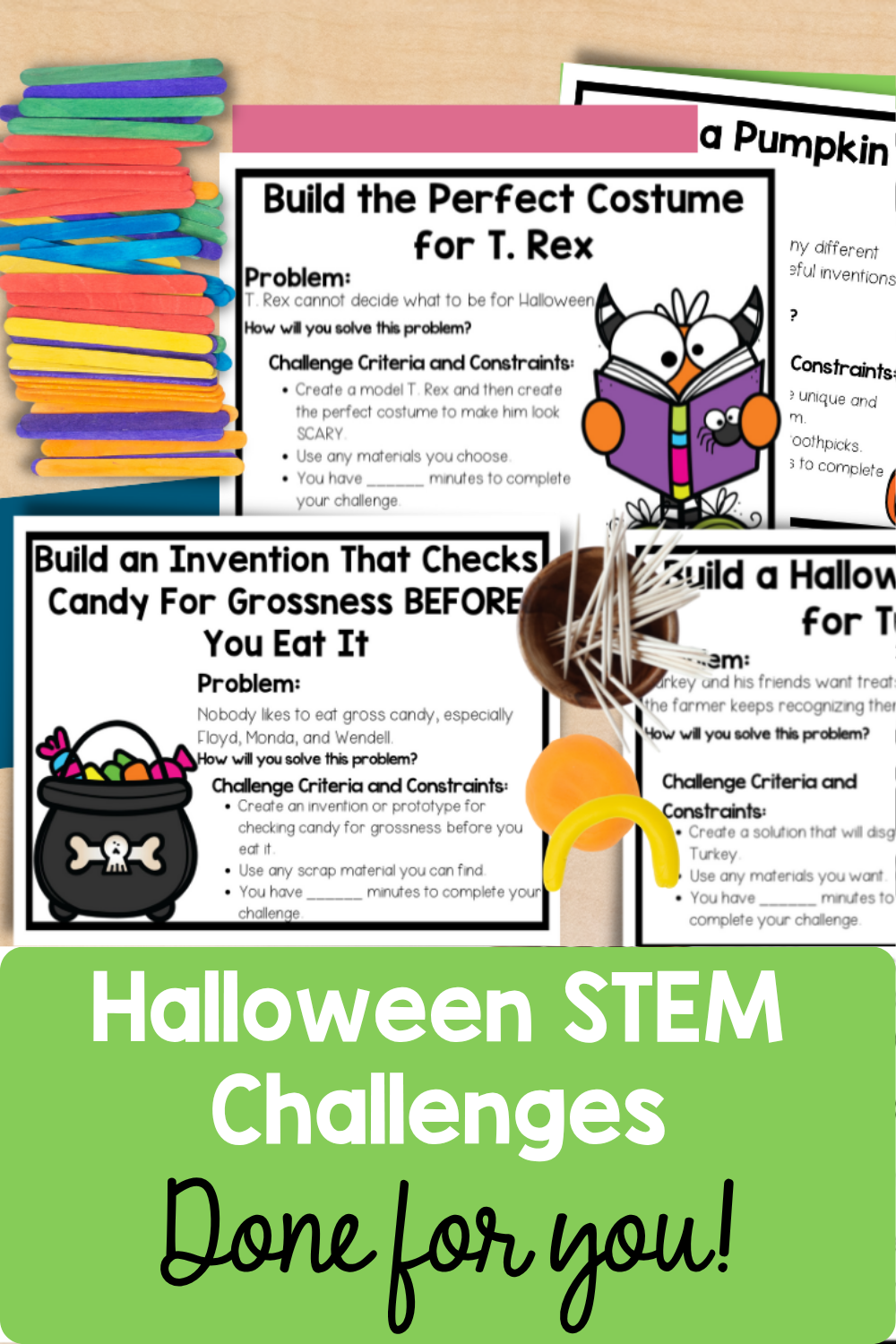
If you love the idea of combining Halloween read-alouds with STEM but don't have time to turn your favorite books into engineering challenges yourself, I've already done some of that work for you.
My Halloween Storybook STEM activities use children's literature as the starting point for building, creativity, critical thinking, and problem-solving—the same approach we've talked about here.
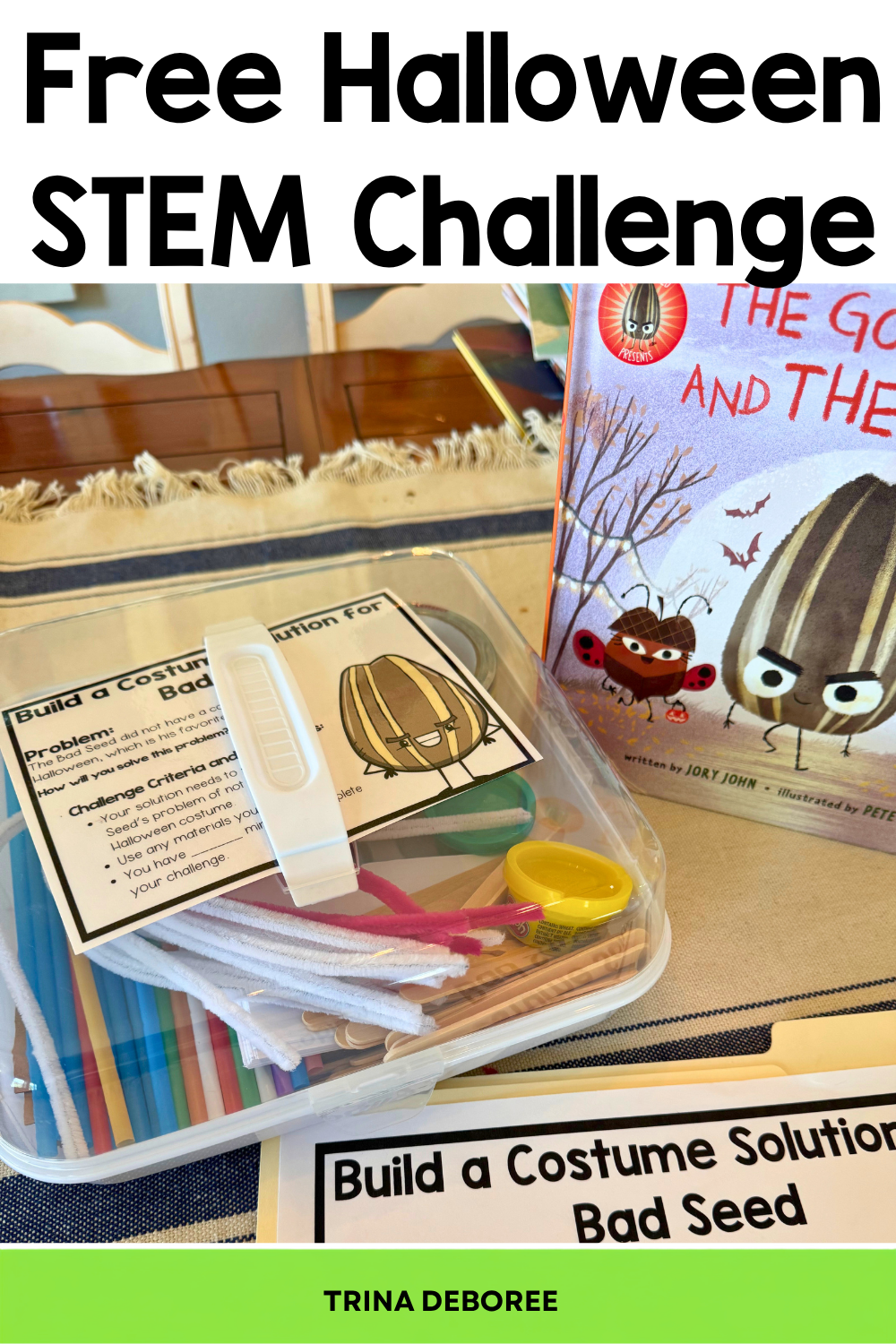
I also have a free Halloween STEM Story Challenge for The Good, the Bad, and the Spooky by Jory John, featuring The Bad Seed. It includes a challenge and thinking pages to help students develop their ideas before they build.
[FREE THE GOOD, THE BAD, AND THE SPOOKY STEM CHALLENGE]
And if you'd like an easy way to organize these activities so they're ready when you need them, grab my free Simple STEM Story Boxes download from last week's episode.
[FREE SIMPLE STEM STORY BOXES]
Use the books you already have.
Use the materials you already have.
Do one challenge instead of ten.
Use what fits. Leave the rest.
And maybe this Halloween, when your classroom gets a little louder because kids are building, laughing, arguing about which material will work, and shouting, "Wait! I have an idea!"...
We don't need to settle them down quite as quickly as we think.
Sometimes we can just let them play.