Teachers Follow Your Heart: Why Teacher Judgment Still Matters More Than Ever
If you've been teaching for any length of time, you've probably experienced this moment.
You're looking at the curriculum sitting on your desk.
You're following the pacing guide.
You're doing exactly what you've been asked to do.
And something inside you quietly whispers:
This isn't working for my students.
So what do you do?
Do you keep going because that's what you're "supposed" to do?
Or do you trust your professional judgment?
I believe teacher judgment matters now more than ever.
Teacher Judgment Doesn't Disappear Because AI Exists
Teachers today are surrounded by more resources than ever before.
Curriculum programs.
Pacing guides.
Artificial intelligence.
Lesson generators.
Professional development.
Social media.
These tools can absolutely support good teaching.
I use many of them myself.
But here's what I hope teachers remember:
Your judgment didn't disappear because someone handed you a new curriculum.
It didn't disappear because AI can generate a lesson in thirty seconds.
It didn't disappear because your district purchased a new program.
Your professional expertise is still one of the most valuable resources in your classroom.
Experience Builds Teacher Expertise
When I started teaching in 1997, we had almost the opposite problem.
There wasn't much curriculum.
We barely had standards.
Honestly, I couldn't even find a copy of them.
Looking back, I don't want to return to those days.
Having structure is helpful.
But teaching during those early years taught me something important.
It taught me to trust my instincts.
Not immediately.
It took mistakes.
It took reflection.
It took years of observing children.
That's how professional judgment develops.
Not from reading one book or attending one workshop.
From teaching.
When Following the Rules Isn't Helping Children
Over time, education shifted.
Instead of very little direction, many teachers were handed detailed scripts, strict pacing guides, and expectations to follow programs with complete fidelity.
Structure became compliance.
Sometimes those lessons worked beautifully.
Sometimes they didn't.
The challenge is that children aren't identical.
Real classrooms are wonderfully messy.
What helps one group of students may completely miss the next.
That's why thoughtful teachers make adjustments.
Not because they're ignoring research.
Because they're paying attention to the children sitting in front of them.
Great Teachers Don't Ignore Resources
One of the biggest misconceptions in education is that adapting a lesson means you're resisting best practices.
I don't believe that's true.
Great teachers don't ignore resources.
They know when to adapt them.
They notice confusion.
They celebrate breakthroughs.
They recognize when students need another example, another approach, or simply another day.
That's not a lack of fidelity.
That's professional expertise.
The Trust Yourself Framework
Over the past few years, I've realized that many of my best teaching decisions followed the same simple process.
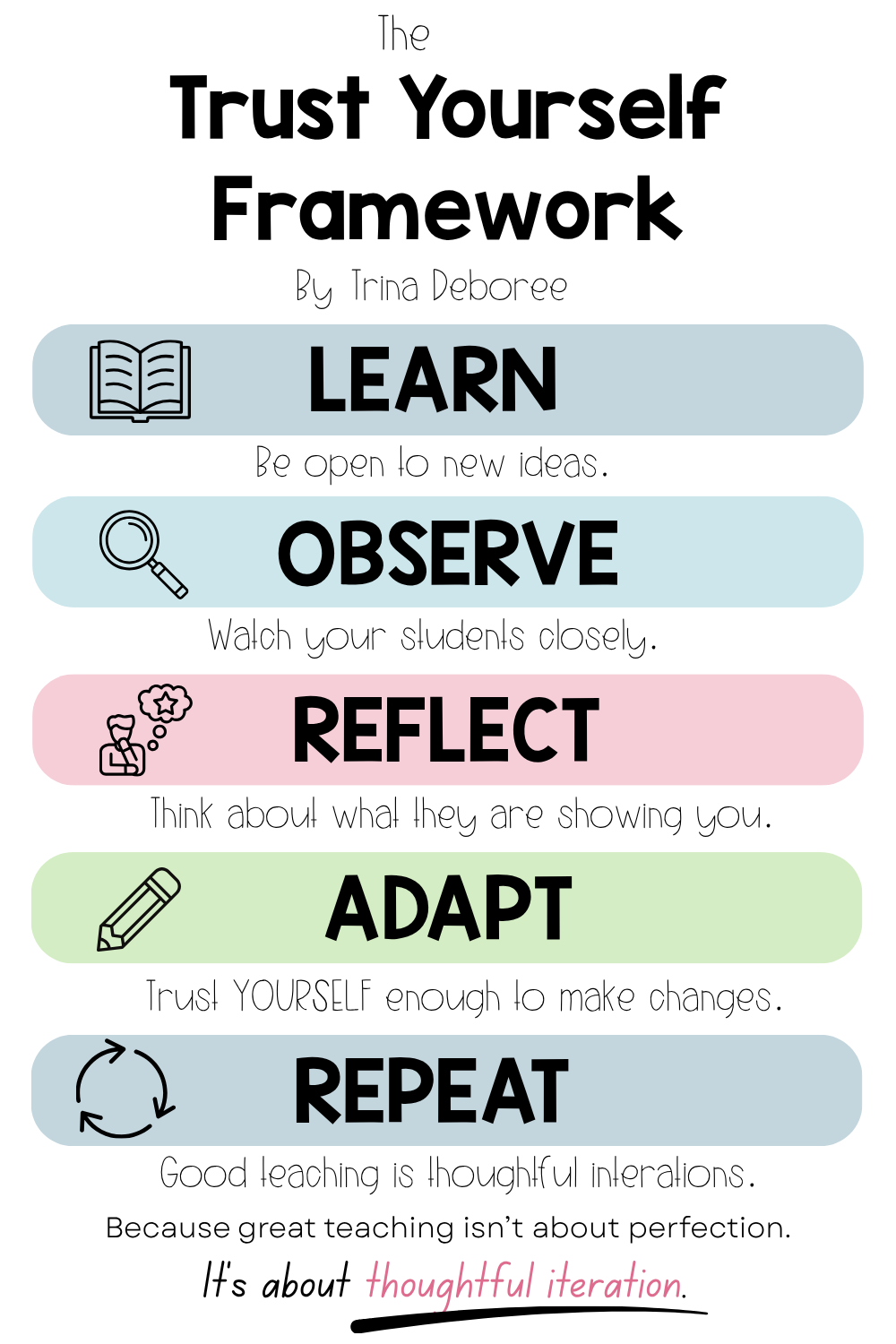
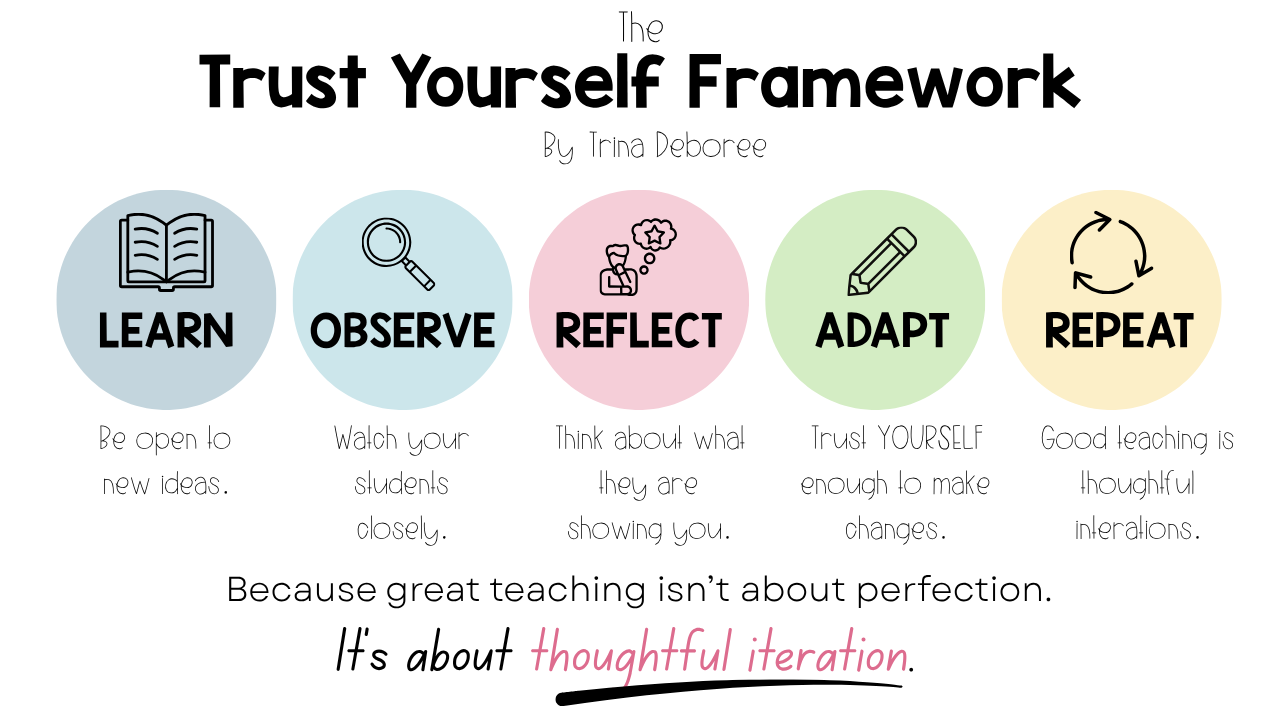
I call it The Trust Yourself Framework.
Learn
Stay curious.
Read the research.
Attend the training.
Explore new ideas.
Observe
Watch your students closely.
They're always giving you information.
Reflect
Ask yourself:
Is this helping my students learn?
Is this building curiosity?
Is this meeting the needs of the children in front of me?
Adapt
Keep what works.
Change what doesn't.
Trust yourself enough to make thoughtful adjustments.
Repeat
Teaching is never finished.
Every year is different.
Every class is different.
Great teaching is thoughtful iteration.
Teachers, Follow Your Heart
I know that phrase can sound overly sentimental. But this isn't about ignoring research or refusing new ideas. It's about remembering that your heart has been shaped by years of experience.
By every child you've encouraged.
Every mistake you've learned from.
Every lesson you've revised.
Every problem you've solved.
That's where teacher judgment comes from.
That's where teacher expertise grows.
Watch the Full YouTube Video
If you've ever questioned your instincts because a curriculum, administrator, AI tool, or social media post suggested another approach, I hope this episode encourages you.
Listen to Teachers Follow Your Heart: Why Teacher Judgment Matters More Than Ever on the One Tired Teacher podcast as we explore why thoughtful teachers don't simply follow directions—they observe, reflect, adapt, and trust themselves.