

Looking for engaging, hands-on Christmas science experiments that connect to real science learning?
The weeks before winter break can be challenging. Students are excited about Christmas, schedules are changing, and teachers still need to teach important science and reading skills.
But what if you could use some of that holiday excitement to make science even more meaningful?
Christmas science activities can help children investigate properties of matter, make predictions, ask questions, and develop scientific explanations—all while having fun.
And when you integrate nonfiction reading into those investigations, you're giving children opportunities to build background knowledge, practice reading comprehension, and use science vocabulary in meaningful ways.
Here are four Christmas science experiments I loved using with my second graders.
1. Reindeer Explore Matter: A Christmas Stocking Science Mystery
Science concepts:
Solids, liquids, gases, observation, inference.
There's something about a mystery that immediately captures children's attention.
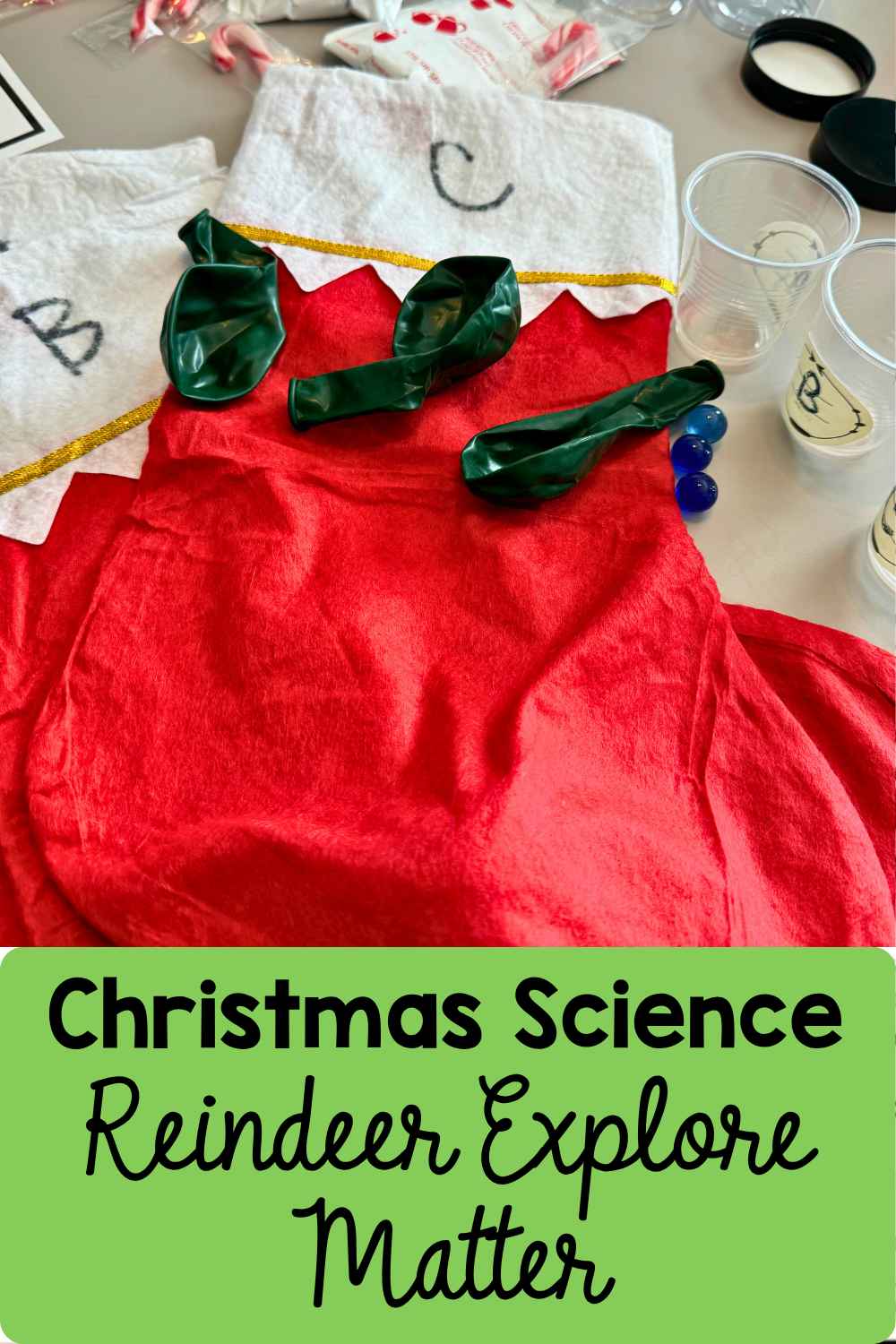
For this investigation, students explore the properties of matter using three Christmas stockings.
Materials
Three Christmas stockings labeled A, B, and C.
Three balloons.
One marble.
Water.
Air.
Student observation and recording sheets.
Materials List from Amazon (Affiliate link)
How It Works
Prepare three balloons.
Place a marble inside one balloon, water inside another, and air inside the third.
Put each balloon into a separate Christmas stocking.
Students carefully reach inside the stockings and feel the balloons without removing them.
Ask:
What do you notice?
Does the material feel hard or soft?
Does anything seem to move?
What do you think is inside?
What evidence supports your prediction?
This is a wonderful opportunity to introduce the difference between observation and inference.
An observation is something we notice using our senses.
An inference is an explanation or conclusion based on what we've observed.
After students record their observations and predictions, reveal the materials.
Discuss how the marble, water, and air represent solids, liquids, and gases.
Reading Connection:
Pair the investigation with nonfiction reading about properties of matter.
Students can learn scientific vocabulary and then use those terms to explain their observations.
Teaching tip:
Ask children to explain why they think something is a solid, liquid, or gas rather than simply naming it.
That's where deeper scientific thinking begins.
2. Santa Investigates Liquids and Solids
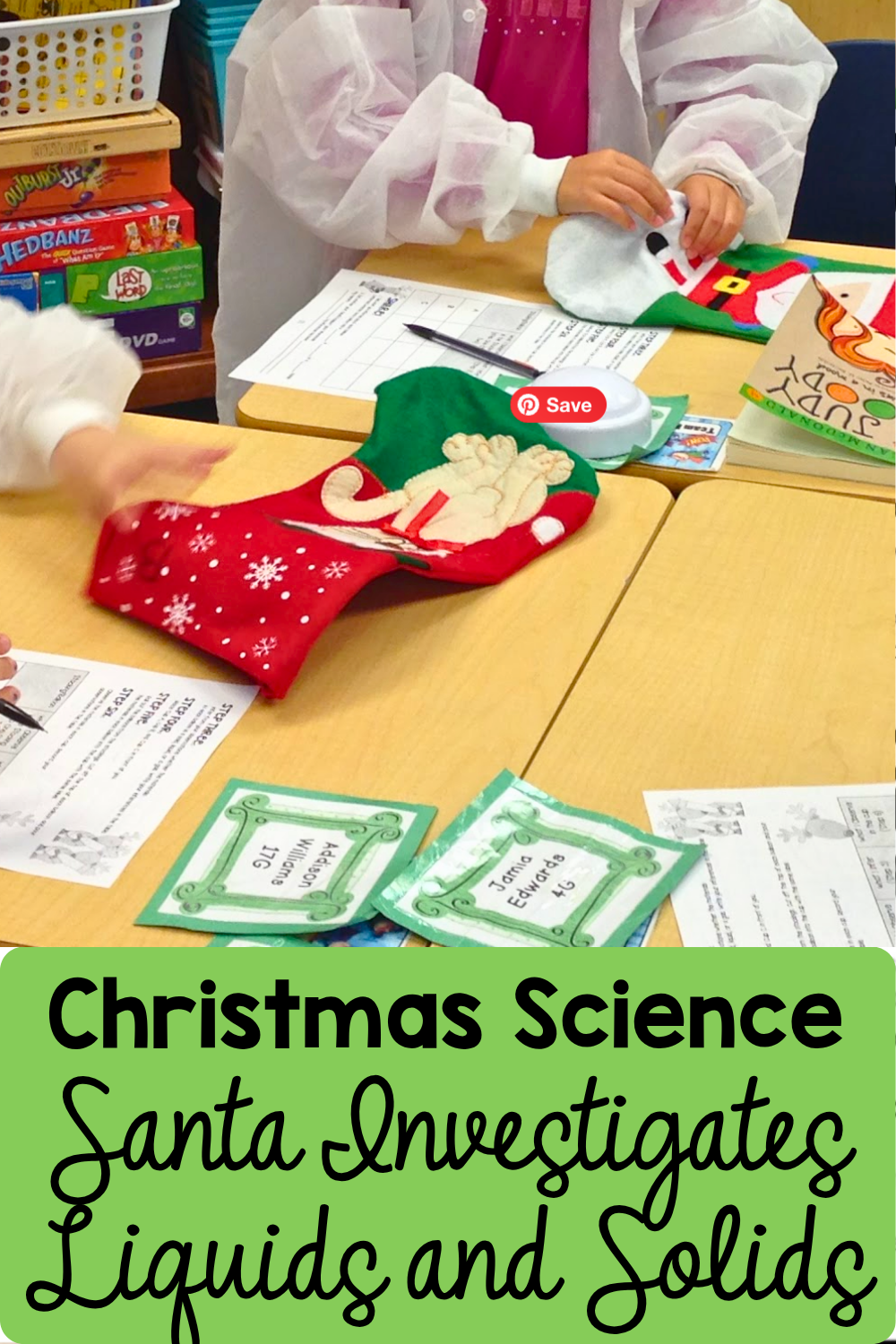
Science concepts:
Properties of matter, comparing solids and liquids, observation.
This Christmas science experiment helps students investigate an important question:
How can we tell the difference between a solid and a liquid?
Materials
Materials List from Amazon (Affiliate link)
Three small, clear jars.
Colored water.
Dry hot chocolate mix.
Vegetable oil.
Marbles.
Student recording sheets.
How It Works
Prepare jars containing colored water, dry hot chocolate mix, and vegetable oil, with marbles added for observation.
Invite students to examine the materials.
Ask:
What do you notice about each material?
What happens when the containers move?
How do the marbles behave?
Which materials flow?
What properties do the materials have in common?
One of my favorite discussions comes from the dry hot chocolate mix.
Children may notice that the powder can be poured.
But does that make it a liquid?
No!
The dry powder is made of tiny solid particles, even though it can flow when poured.
This creates an opportunity for children to compare material properties and explain their reasoning.
Reading Connection
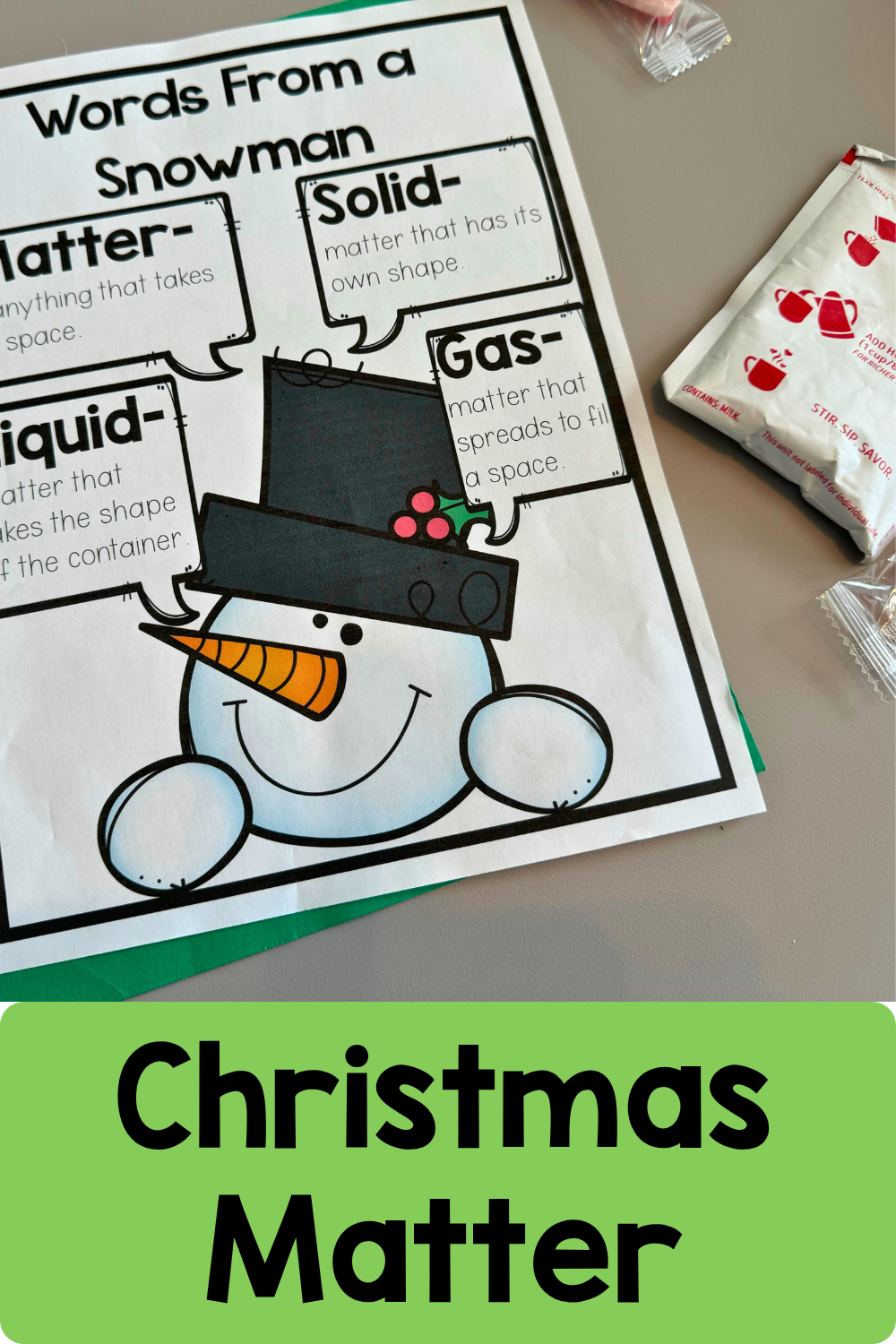
Use an informational text about solids and liquids to introduce or reinforce vocabulary such as property, observe, compare, solid, and liquid.
Then invite students to use that vocabulary when explaining what they discovered.
Teaching tip:
Give children time to discuss their observations with a partner before sharing with the class.
Talking through scientific ideas helps students develop clearer explanations.
3. Mr. Snowman Investigates Floating and Sinking
Science concepts:
Floating, sinking, prediction, observation, changes in shape.
This might be one of the most fun Christmas science experiments you can do with young children.
And it could even become part of a classroom Christmas celebration!
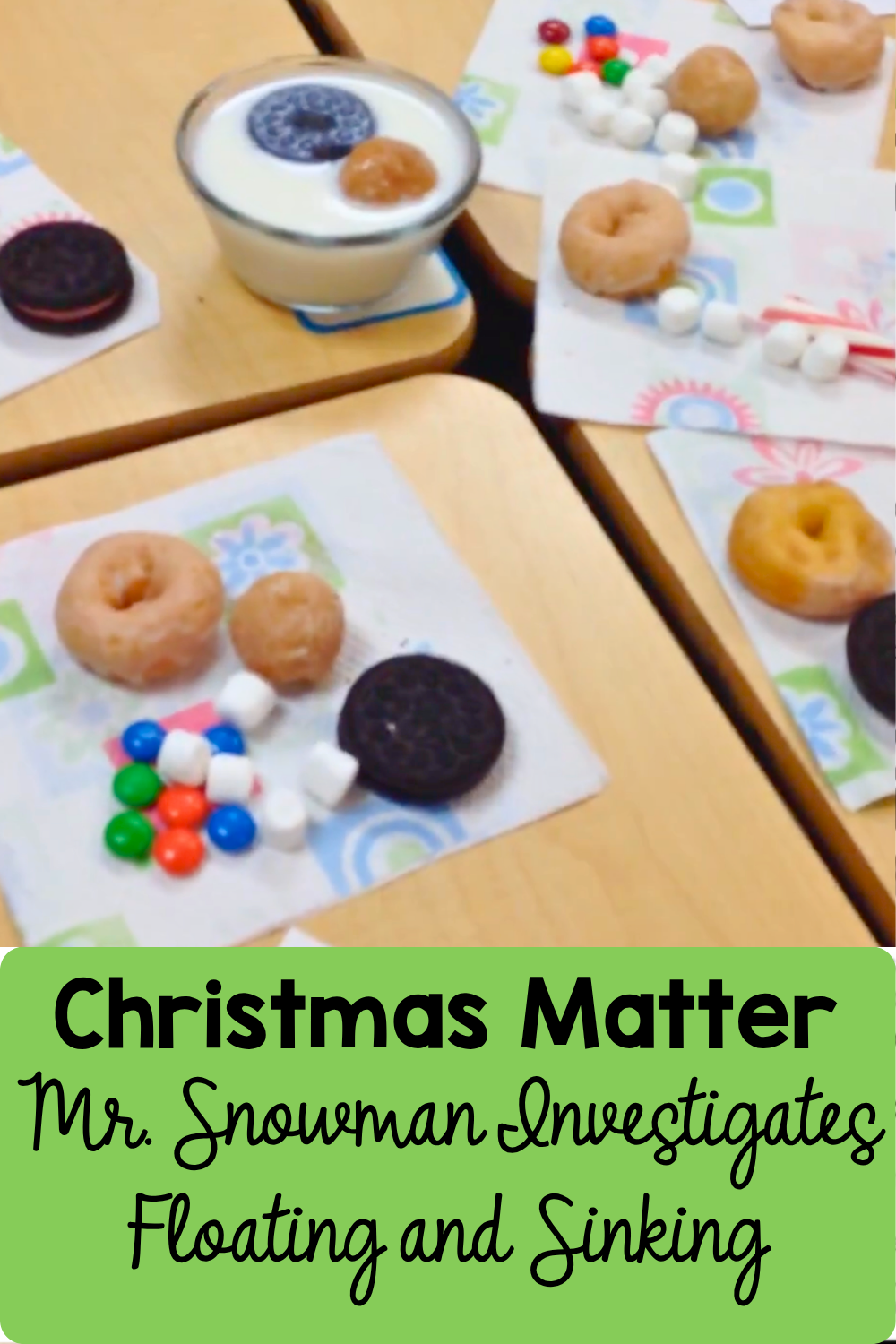
Students investigate floating and sinking using familiar holiday treats.
Materials
Materials List from Amazon (Affiliate link)
Marshmallows.
Cookies.
Candy canes.
Donut holes.
Containers of water or milk.
Student prediction and observation sheets.
How It Works
Before testing, ask students to predict whether each object will float or sink.
Will a marshmallow float?
What about a candy cane?
Will a cookie behave the same way?
Then let students test each material and record their observations.
Remember, the results may vary depending on the objects and testing conditions.
And that's okay!
A prediction isn't a promise. It's an idea we're going to test.
Take the Investigation Further
Here's where things get especially interesting.
Ask students what might happen if they change the shape of a donut.
Will changing the shape affect whether it floats or sinks?
Have students make another prediction, change the shape, and test again.
Now they're not simply sorting objects into two categories.
They're investigating how changing something might affect the result.
Reading Connection
Connect the experiment to nonfiction vocabulary such as predict, observe, compare, and properties.
Students can also practice explaining their results using complete sentences and evidence.
Teaching tip:
Keep any treats used for testing separate from food intended for eating. If you're serving snacks afterward, use fresh portions and follow your school's food-allergy policies.
4. The Gingerbread Girl Investigates Changes in Matter
Science concepts:
Changes in materials, temperature, mixing, fair testing.
Hot chocolate is a familiar Christmas treat.
But it can also become a wonderful science investigation!
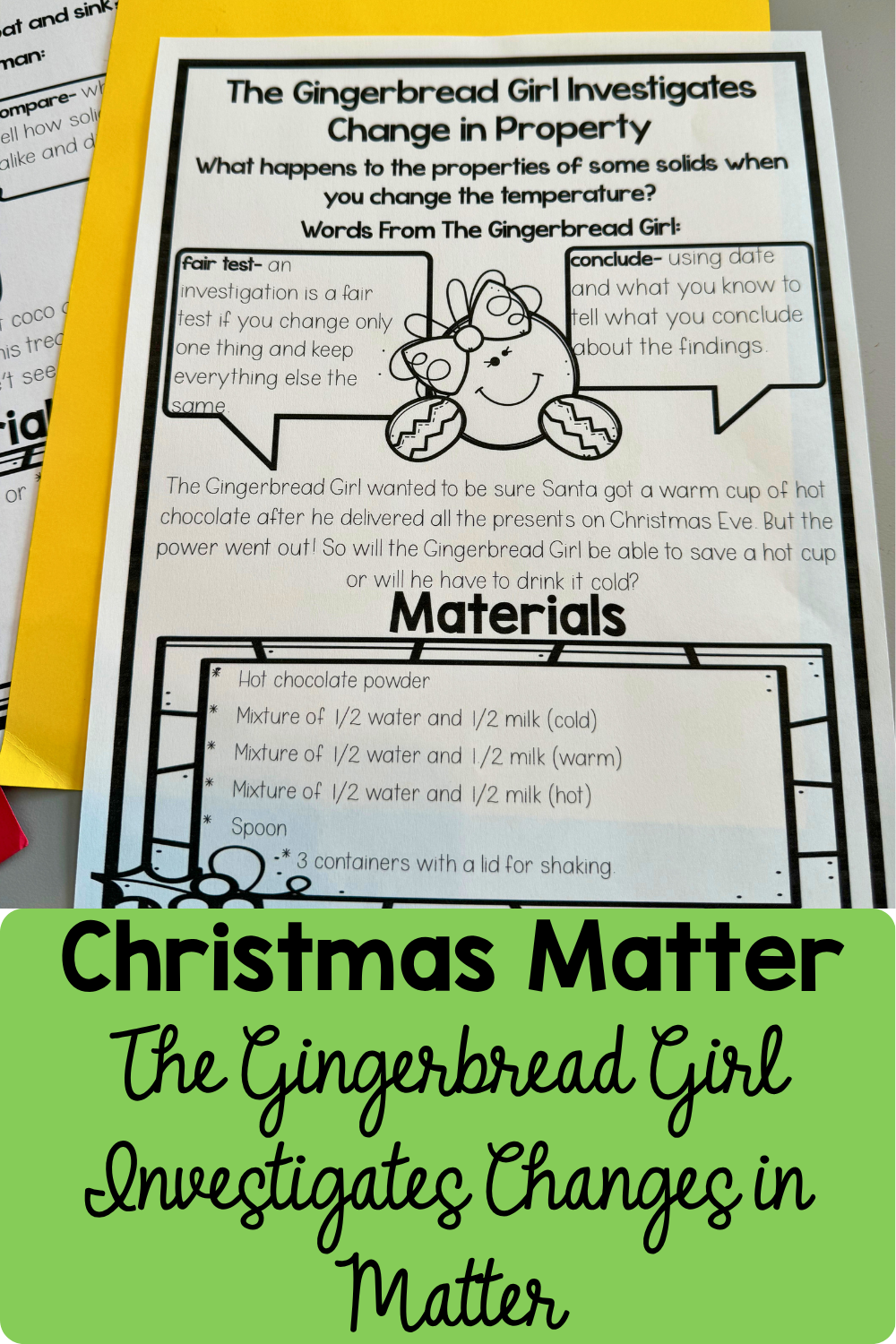
In this experiment, students investigate what happens when hot chocolate powder is mixed with liquids at different temperatures.
Materials
Materials List from Amazon (Affiliate link)
Hot chocolate powder.
Cold milk or water.
Warm milk or water.
Hot milk or water.
Clear cups or containers.
Measuring tools.
Student recording sheets.
How It Works
Prepare three samples of liquid at different temperatures.
Keep the amounts of liquid and hot chocolate powder comparable so that temperature is the main thing changing.
Ask students to predict what will happen when the powder is added to each sample.
Then observe and compare the results.
Does the powder mix the same way in every sample?
What differences do students notice?
Does temperature seem to affect the results?
Did the observations match their predictions?
This is a natural introduction to the idea of a fair test.
Ask children:
"If we change three things at the same time, how will we know which one made the difference?"
That's a question young scientists can understand.
Reading Connection
Use nonfiction reading about changes in matter to help students connect their observations to scientific ideas.
Have students explain what they noticed before and after mixing.
Safety reminder: An adult should handle hot liquids. Use safe temperatures, supervise the investigation, and keep any drinks intended for consumption separate from experimental materials.
How to Integrate Nonfiction Reading Into Christmas Science Experiments
One of the things I've always believed is that reading and science shouldn't have to compete for time in our classrooms.
They can support one another.
Reading gives children information and vocabulary to help them understand the world.
Science gives them opportunities to investigate that world for themselves.
And when we bring those experiences together, learning becomes more meaningful.
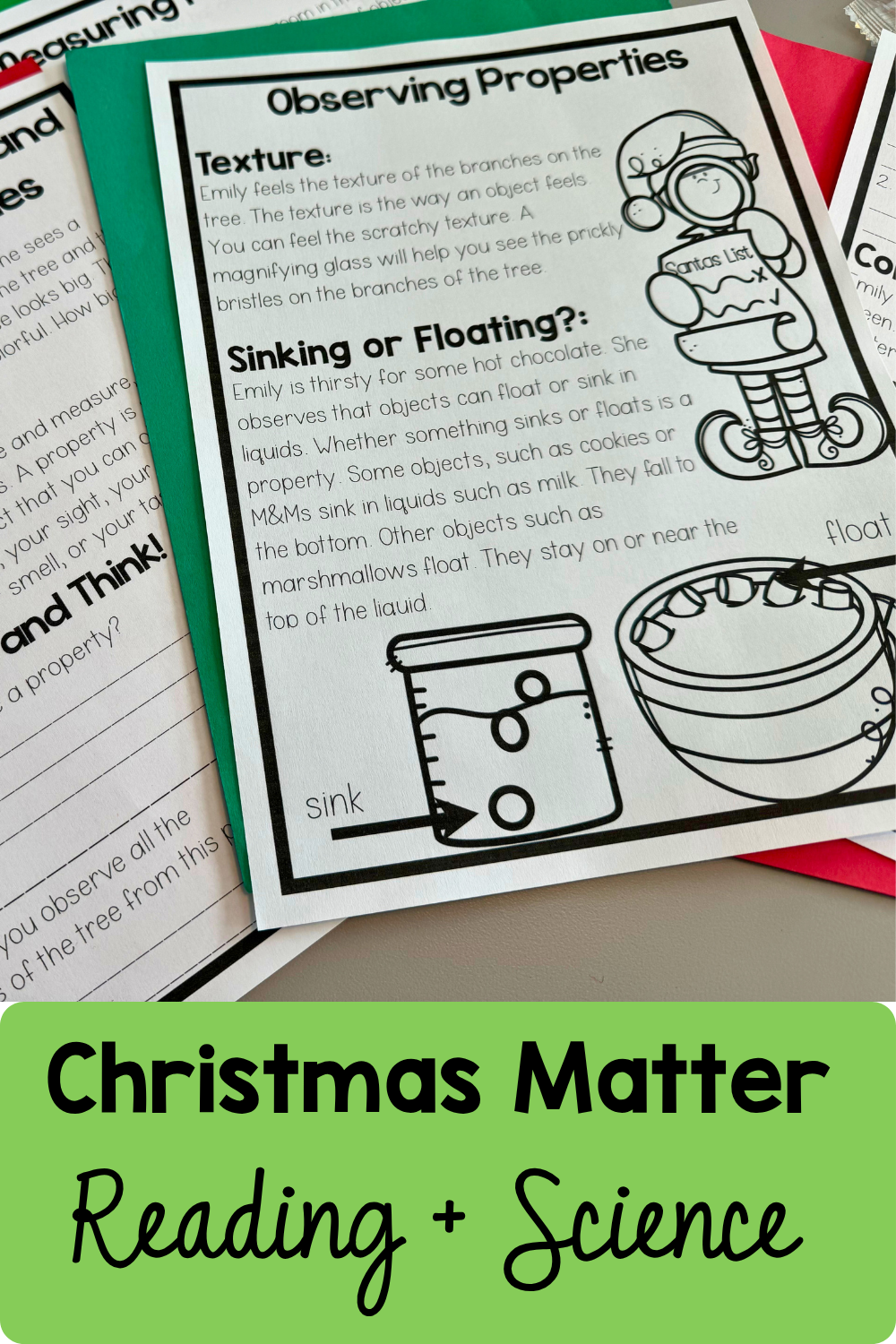
In my Christmas Science and States of Matter unit, I include nonfiction reading to help children build background knowledge and develop scientific vocabulary.
One of those readings is called Emily the Elf Observes and Measures Properties.
Students learn about properties of matter, explore the vocabulary, conduct investigations, and then use what they've learned to explain their observations.
This gives nonfiction reading a real purpose.
Children aren't simply memorizing definitions.
They're using what they read to make sense of something they've experienced.
A Simple Reading and Science Framework
I like to think about it in three steps.
1. Read
Introduce or reinforce a science concept through a short nonfiction passage.
2. Investigate
Give students an opportunity to explore that concept using hands-on materials.
3. Explain
Ask students to describe their observations and use scientific vocabulary to support their thinking.
You can also adjust the order.
Sometimes an interesting investigation is the perfect way to spark curiosity before students read.
The important part is that the reading and investigation support each other.
Christmas Science Activities Don't Have to Be Complicated
December can feel overwhelming.
Between special events, assessments, schedule changes, and holiday excitement, it's easy to feel like there isn't enough time for everything.
But meaningful science instruction doesn't require elaborate materials or hours of preparation.
A Christmas stocking can become an investigation of solids, liquids, and gases.
A jar of hot chocolate mix can lead to a discussion about the properties of matter.
A floating marshmallow can inspire predictions and new questions.
And a cup of hot chocolate can introduce the idea of a fair test.
Learning should be joyful. And children deserve opportunities to investigate, wonder, and discover.
You don't have to do all four experiments.
Choose one that fits the science concepts you're already teaching.
Give children time to ask questions, make predictions, and explain what they notice.
That's meaningful science learning.
Christmas Science and States of Matter Unit for Second Grade
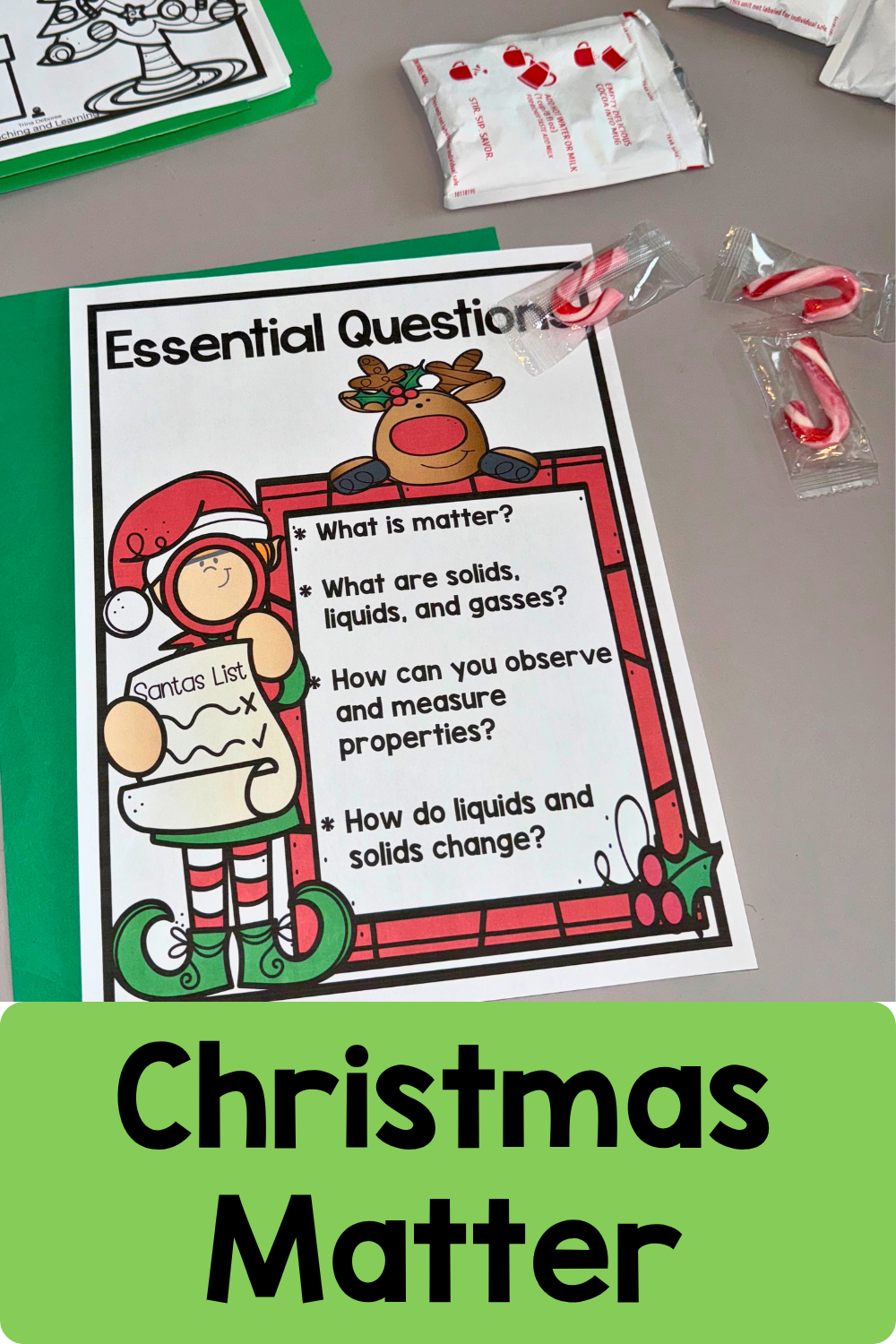
If you'd like these four Christmas science experiments already organized for your classroom, I've created a Christmas Science and States of Matter unit.
It includes:
Four Christmas-themed science investigations.
Student recording and thinking sheets.
Science anchor charts.
Nonfiction reading passages.
Vocabulary support.
The activities are designed to help students explore properties of matter while connecting reading and science.
[EXPLORE THE CHRISTMAS SCIENCE & STATES OF MATTER UNIT]
Listen to One Tired Teacher — Episode 321
Want to hear more about teaching these four Christmas science experiments?
In Episode 321 of One Tired Teacher, I walk through each investigation, explain the science connections, and share how to integrate nonfiction reading.
[Click the audio at the top of this page for the audio. Click the video for YouTube.]
Remember, you don't have to turn every lesson into a big event.
Sometimes all it takes is a good question, a few simple materials, and the opportunity for children to discover something new.
That's where some of the best learning happens.
